

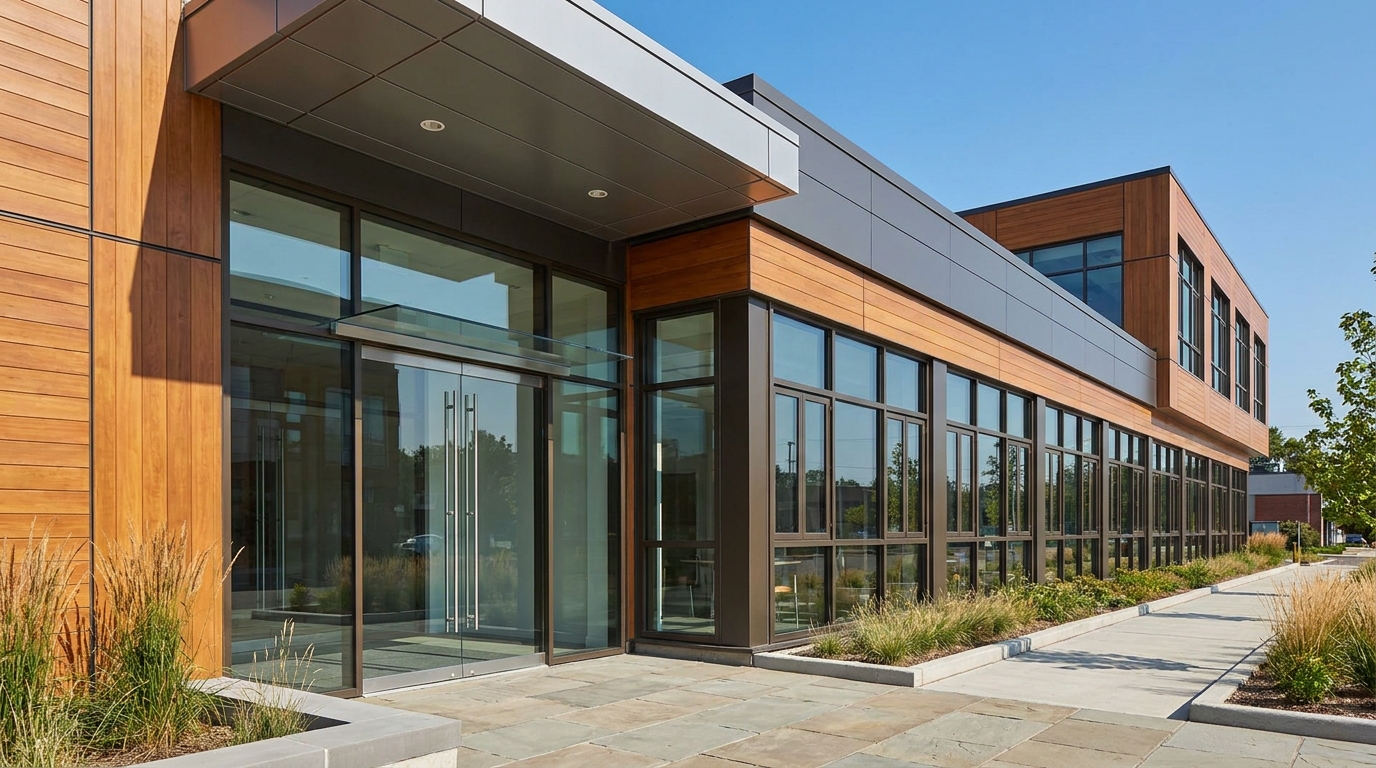
Commercial Windows and Exterior Glass Doors
Commercial windows and exterior glass doors are the openings that control daylight, ventilation, heat gain and access across a building’s envelope. Daltex Glass supplies and installs fixed, hung, sliding and casement windows in aluminum framing, manufactures the insulated glass units that go into them, and fits commercial glass doors and all-glass exterior entrances.
Commercial specification is not residential specification scaled up. Frames carry higher cycle counts, glass sizes are larger, and the performance requirements are usually set by a building code or a landlord’s criteria rather than by preference. Send your schedule or opening sizes to Orders@daltexglass.com for pricing.
Window Types We Supply and Install
Fixed commercial windows
Fixed windows do not open. With no operating hardware and a continuous seal all the way around, they give the best air and water performance of any window type and the largest available glass sizes. They are the default wherever ventilation comes from mechanical systems, which covers most modern commercial buildings.
Single- and double-hung windows
Hung windows slide vertically. A single-hung has one operating sash at the bottom; a double-hung has two, so both sashes move and both can be tilted in for cleaning from inside. Double-hung is worth the extra cost above ground level, where external cleaning access is expensive. Both suit buildings where a traditional appearance is wanted.
Sliding windows
Horizontal sliders move sideways on a track. They open without projecting into or out of the building, which makes them useful beside walkways, patios and parking. They are simple, robust and easy to operate, and the lack of a projecting sash means nothing to catch on.
Casement windows
Casements hinge at the side and swing open. Because the sash compresses against the frame seal when closed, casements typically seal better than sliding or hung types. The open sash also catches passing air and directs it inside, which makes them effective where natural ventilation matters. Check clearance before specifying, since the sash projects.
Aluminum Windows
Aluminum is the standard commercial window frame material. It is strong enough to carry large glass sizes in slim profiles, dimensionally stable through temperature swings, does not rot or warp, and holds anodized and powder-coated finishes well under sustained sun exposure.
- Thermally broken frames, which place an insulating barrier inside the extrusion to cut heat transfer
- Slim sightlines that maximise glass area for a given opening
- Anodized finishes in clear, dark bronze and black, plus powder-coated colors
- Long service life with minimal maintenance beyond seals and hardware
- Fabrication to measured sizes, which matters in older buildings with non-standard openings
Non-thermal aluminum conducts heat readily, so on any project where energy performance is being assessed, thermally broken framing is worth specifying from the outset rather than retrofitted later.
Insulated Glass Units
An insulated glass unit is two or more panes bonded around a spacer with a sealed cavity between them. The cavity does the insulating work, and the perimeter seal is what keeps it doing that job.
Daltex Glass manufactures insulated glass in-house, so units are made to the exact dimensions and make-up required rather than ordered in and adapted. Specification options include low-emissivity coatings that reflect radiant heat while passing visible light, argon fills, warm-edge spacers, tints and reflective coatings for solar control, and laminated make-ups for acoustic performance or glass retention.
When a unit fogs or hazes between the panes, the perimeter seal has failed and moisture has entered the cavity. It cannot be cleaned, because the condensation is on internal surfaces, and the unit has also lost insulating performance. Replacing the sealed unit is the only durable fix, and the frame normally stays exactly as it is.
Commercial Glass Doors
Exterior commercial glass doors are usually aluminum stile-and-rail construction, with the glass held inside an aluminum perimeter frame. That frame provides solid fixing points for closers, locks and pulls, and allows glass to be replaced without discarding the door.
Stile width is the key decision. Narrow stiles show the most glass and suit showrooms and retail; medium and wide stiles carry more aluminum, accept heavier locking hardware and stand up better to very high traffic such as schools, clinics and food outlets. Doors are supplied complete with frames, pivots, closers, locking hardware, thresholds and weather seals.
All-Glass Exterior Entrances
An all-glass entrance uses thick tempered glass with minimal metal , slim patch fittings top and bottom, or floor closers set into the slab. The result is a clean, high-end entrance common in corporate lobbies, showrooms and hospitality buildings.
One practical constraint matters more than any other: all hardware cut-outs are machined into the glass before tempering and cannot be altered afterwards. Lock position, patch fitting locations and pull handle centres must all be fixed before fabrication starts. Getting the survey right first time is essential, which is why these openings are measured on site rather than taken from drawings alone.
Problems This Service Solves
- High cooling costs from single-glazed or non-thermal windows on exposed elevations
- Fogged and hazed insulated units that no longer insulate and look poor from outside
- Windows that stick, will not lock, or leak air and water around perished seals
- Broken or cracked glass leaving a building insecure
- Entrances that are heavy to open, slam shut, or fail to latch reliably
- Dated frame profiles and discolored finishes on an otherwise refurbished building
How Projects Run
- Survey or schedule review, confirming opening sizes, frame type and glass make-up
- Specification and written quotation
- Fabrication of frames and in-house manufacture of the glass units
- Delivery scheduled to the site programme
- Installation, sealing, and adjustment of operating hardware
- Testing, clean-down and handover
Collection and delivery arrangements are set out on the payment and delivery page. Supply-only is available for contractors installing with their own crews.
Why Choose Daltex Glass
More than 25 years in glass, aluminum and window products, in-house insulated glass manufacturing, and wholesale supply alongside installation. That combination means the glass is made for the frame it is going into. You can review the existing window services listed by Daltex Glass, see finished work in the installation gallery, and read the company background on the about page.
11419 Ferrell Dr #108, Farmers Branch, TX 75234Mon-Fri 8:00 AM to 5:00 PM · Sat 8:00 AM to 1:00 PM214-865-9961
Frequently Asked Questions
What is the difference between single-hung and double-hung windows?
A single-hung window has one moving sash at the bottom while the top stays fixed. A double-hung has two moving sashes, so both open and both can usually tilt inward for cleaning from inside the building. Double-hung costs more but is worth it above ground level, where external cleaning access is expensive.
Why has my commercial window gone cloudy between the panes?
The perimeter seal on the insulated glass unit has failed and moisture has entered the sealed cavity. The haze forms on the internal faces of the glass, so it cannot be cleaned off, and the unit has lost part of its insulating value. Replacing the sealed unit resolves both issues, usually without touching the frame.
Can insulated glass units be replaced without replacing the window frame?
In most cases yes. The sealed unit is glazed into the frame and can be removed and replaced provided the frame is sound and the glazing pocket suits the replacement thickness. Very old single-glazed framing may not have the depth for an insulated unit, in which case the frame has to change too.
Which window type seals best against air and water?
Fixed windows, because they have no operating hardware and an uninterrupted seal. Among opening types, casements generally seal better than sliding or hung windows, since the sash compresses against the frame seal as it closes rather than sliding past a brush or fin seal.
Are aluminum windows energy efficient?
Aluminum on its own conducts heat readily, so a non-thermal aluminum frame is a weak point. Thermally broken aluminum places an insulating barrier inside the extrusion and performs far better. Paired with a low-emissivity insulated glass unit, thermally broken aluminum windows perform well while keeping slim commercial sightlines.
How are all-glass entrance doors measured?
On site, and carefully. Hardware cut-outs in an all-glass door are machined before the glass is tempered and cannot be changed afterwards, so lock positions, patch fittings and handle centres must be confirmed before fabrication begins. That is why these openings are surveyed in person rather than priced from drawings alone.
Get Your Window and Door Package Priced
Send a window schedule, opening sizes or photographs and Daltex Glass will prepare a specification and quotation. Call 214-865-9961, email Orders@daltexglass.com, or send your window and door schedule.


