

Blog
Emergency Board-Up and Glass Replacement for Dallas Businesses

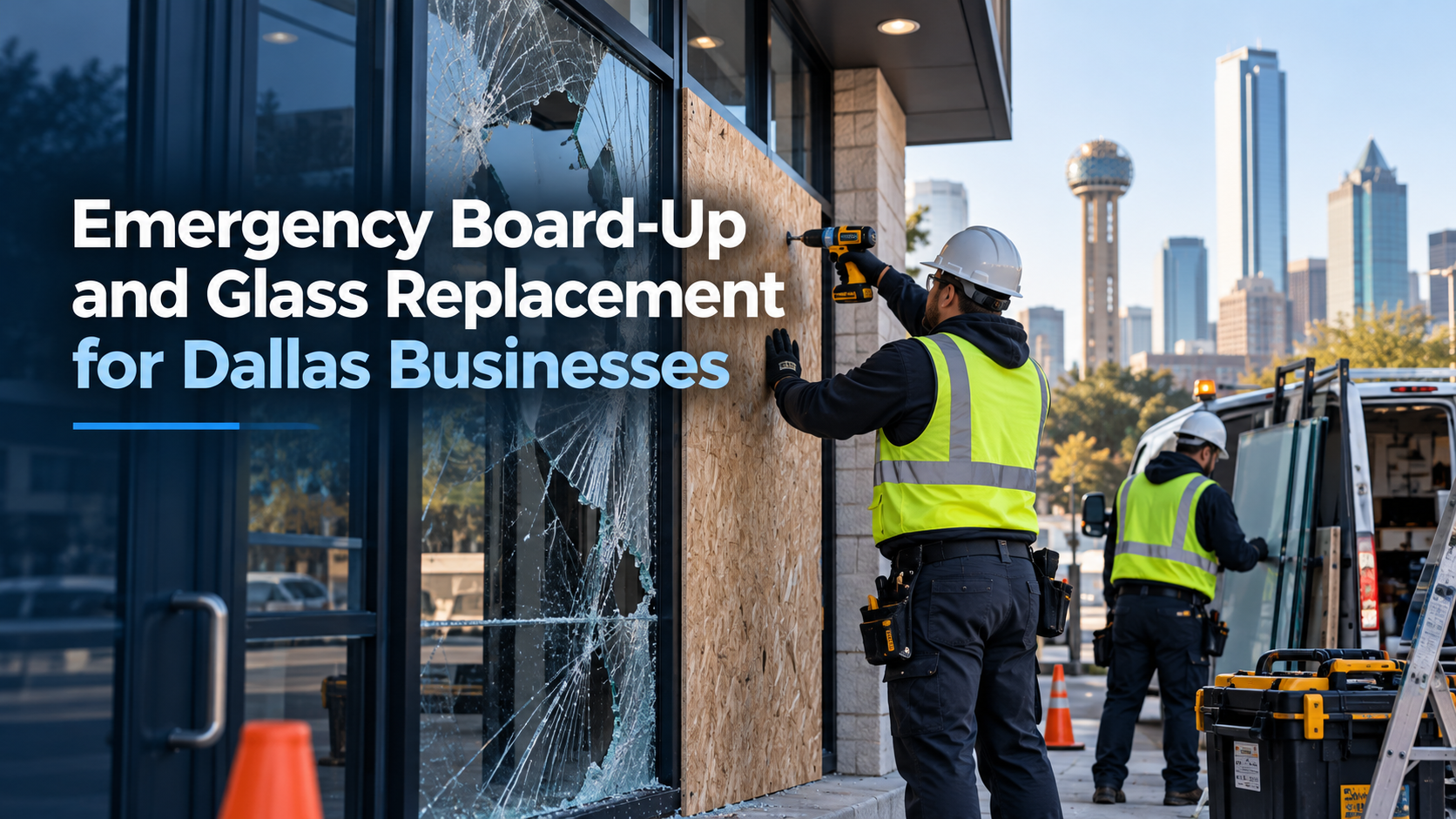


Broken storefront or commercial window glass can create an immediate safety, security and business-continuity problem. The opening may expose employees, customers, merchandise and equipment to sharp glass, weather and unauthorized entry. Emergency board-up secures the property temporarily while the damaged frame is inspected, measurements are confirmed and the correct replacement glass is fabricated. For Dallas businesses, responding in the correct sequence can reduce additional damage and help the final glass replacement proceed more efficiently.
Daltex Glass provides glass repair services for broken storefronts, commercial windows, doors and related framing throughout Dallas-Fort Worth. Temporary board-up is especially important when the replacement panel is a custom size, coated glass or insulated unit that cannot be obtained immediately from standard stock.
What Should a Business Do Immediately?
The first priority is to keep people away from the affected area. Broken glass can remain suspended within the frame, spread across walkways or fall without warning after an impact. Employees should not attempt to pull loose pieces from a storefront or door unless they have suitable training and protective equipment. The area should be isolated until a professional can assess the condition and remove unstable material safely.
Photograph the damage from a safe distance before cleanup begins. Images of the opening, frame, surrounding property and likely cause can support insurance documentation and help the glass company understand the initial situation. When reporting the breakage, provide the business address, approximate opening dimensions, photographs and details about public access, floor level, parking restrictions and operating hours.
What Is Emergency Board-Up?
Emergency board-up is a temporary security measure used to close an opening after glass has broken or become unsafe. The damaged material is assessed and removed when necessary, and a suitable board or temporary barrier is secured without causing avoidable damage to the surrounding structure. The objective is to restrict entry, protect the interior and maintain a safer perimeter while permanent glass is being prepared.
Board-up is not the final repair and should not be treated as a long-term substitute for glazing. Materials, fasteners and attachment methods must be selected according to the opening and frame condition. An incorrectly installed board can damage reusable aluminum, interfere with doors or leave gaps that allow water and unauthorized access into the property.
Why Replacement Glass May Not Be Available Immediately
Commercial storefront glass is often fabricated for a particular opening. The replacement may require tempered or laminated safety glass, a specific thickness, custom dimensions, holes, notches, tint, coating or insulated construction. Tempered glass must be cut and processed before heat treatment, so it cannot be resized after production. Insulated glass requires multiple panes, a spacer, sealed cavity and appropriate curing time.
These manufacturing requirements explain why emergency board-up and final glass replacement may occur during separate visits. Daltex’s fabrication services support custom dimensions and project-specific glass processing, allowing the replacement to be produced for the existing frame rather than forcing an unsuitable stock panel into the opening.
Inspect the Frame Before Ordering Glass
Storefront damage can affect more than the visible pane. A vehicle impact, forced entry or heavy object may bend aluminum framing, dislodge glazing stops, damage gaskets or move the door system out of alignment. Installing new glass without correcting these conditions can create uneven edge pressure, leaks, poor retention or repeated breakage.
The inspection should determine whether the frame is square, structurally stable and capable of receiving replacement glass. Setting blocks, gaskets, sealants, glazing stops and drainage paths should also be checked. If the opening is part of a complete storefront entrance system, door pivots, closers, locks, thresholds and adjacent panels may need evaluation before the business reopens the area.
Selecting the Correct Replacement Glass
The replacement should match the required dimensions, thickness, safety treatment and visual characteristics of the surrounding façade. Commercial doors, panels near walking surfaces and other hazardous locations may require tempered or laminated safety glass. Exterior windows may use insulated glass, Low-E coatings, tints or reflective products selected for thermal performance and appearance.
Matching older glass can be challenging because coatings, tints and manufacturing methods change over time. A new panel may appear slightly different under certain lighting conditions, even when it is the closest available product. The glass company should explain potential differences before fabrication, particularly when the replacement will sit beside several highly visible existing panels.
Protecting Business Operations
A broken storefront does not always require the entire business to close, but the affected area must remain safely separated from customers and employees. Board-up can restore basic security while owners coordinate cleanup, insurance, replacement production and installation. Restaurants, shops and offices may also request work outside normal operating hours to reduce interference with customers and deliveries.
Access conditions should be discussed when requesting service. Parked vehicles, public sidewalks, interior displays, security systems and limited loading areas can affect how safely the glass is removed and installed. Larger panels may require multiple installers, specialized lifting equipment or temporary control of the surrounding area.
Documenting Damage for Insurance
Business owners should retain photographs, incident reports, police reports when applicable, invoices and details of temporary security work. The insurance provider may request information about the cause, time and extent of the damage before approving the claim. Emergency work should still proceed when an unsecured opening presents an immediate risk, but keeping accurate records can make the claim easier to review.
Ask the glass company to describe temporary board-up and permanent replacement separately on the quotation or invoice. The scope should identify the glass type, dimensions, frame repairs, hardware, labor, disposal and access equipment included. Daltex’s guide to glass repair costs explains why size, fabrication, frame condition, access and emergency scheduling can affect the final price.
How Long Does Commercial Glass Replacement Take?
The timeline depends on the product rather than the size of the opening alone. A standard tempered panel may be produced faster than a coated insulated unit, laminated configuration or custom shape. Availability of matching glass, fabrication schedules, field measurements and equipment can also influence completion time.
Temporary board-up provides protection during this period, but the business should ask when measurements will be confirmed, when the glass is expected to enter production and how installation will be scheduled. Projects involving several damaged openings may need organized project support to coordinate material, access and phased installation.
Preventing Additional Damage
After the opening is secured, investigate the event that caused the breakage. Vehicle impacts may indicate a need for protective bollards, while repeated door-panel cracks can point to alignment, closer or threshold problems. Stress cracks near the glass edge may result from frame pressure, insufficient clearance or damaged setting blocks rather than an obvious external impact.
The objective should be to restore the complete opening, not simply replace the visible panel. Correcting bent framing, worn gaskets, dragging doors and damaged hardware can reduce the risk of another failure. Preventive improvements should be evaluated according to the property layout and cause of damage rather than applied automatically to every storefront.
Frequently Asked Questions
Can a broken storefront be boarded up the same day?
Same-day board-up may be possible depending on location, opening size, site access and crew availability. Business owners should call and provide photographs, approximate measurements and information about immediate security risks. Permanent replacement may require additional time when the panel must be tempered, laminated, coated or assembled as an insulated glass unit.
Does board-up damage the storefront frame?
A properly planned board-up should secure the opening while minimizing damage to reusable framing and surrounding finishes. The attachment method depends on the aluminum system, wall construction and remaining glass. Improvised fastening can bend framing, obstruct doors or create additional repair work, which is why professional installation is preferable.
Can only the broken glass be replaced?
Only the glass may need replacement when the surrounding frame remains square, stable and undamaged. If the impact has distorted aluminum, loosened glazing components or affected a nearby door, those problems should be corrected before the new panel is installed. The complete opening must be inspected to determine the appropriate scope.
Final Takeaway
Emergency board-up helps Dallas businesses secure a damaged opening while the correct replacement glass is measured and fabricated. A reliable response includes protecting people, documenting the damage, removing unstable material, securing the property, inspecting the frame and installing glass that meets the application’s safety and performance requirements. For urgent commercial breakage, Daltex Glass can assess storefronts, windows and doors, provide temporary protection and coordinate permanent replacement across Dallas-Fort Worth.


