

Jamb-Mounted Shower Hinge Kits: When and Why to Use Them
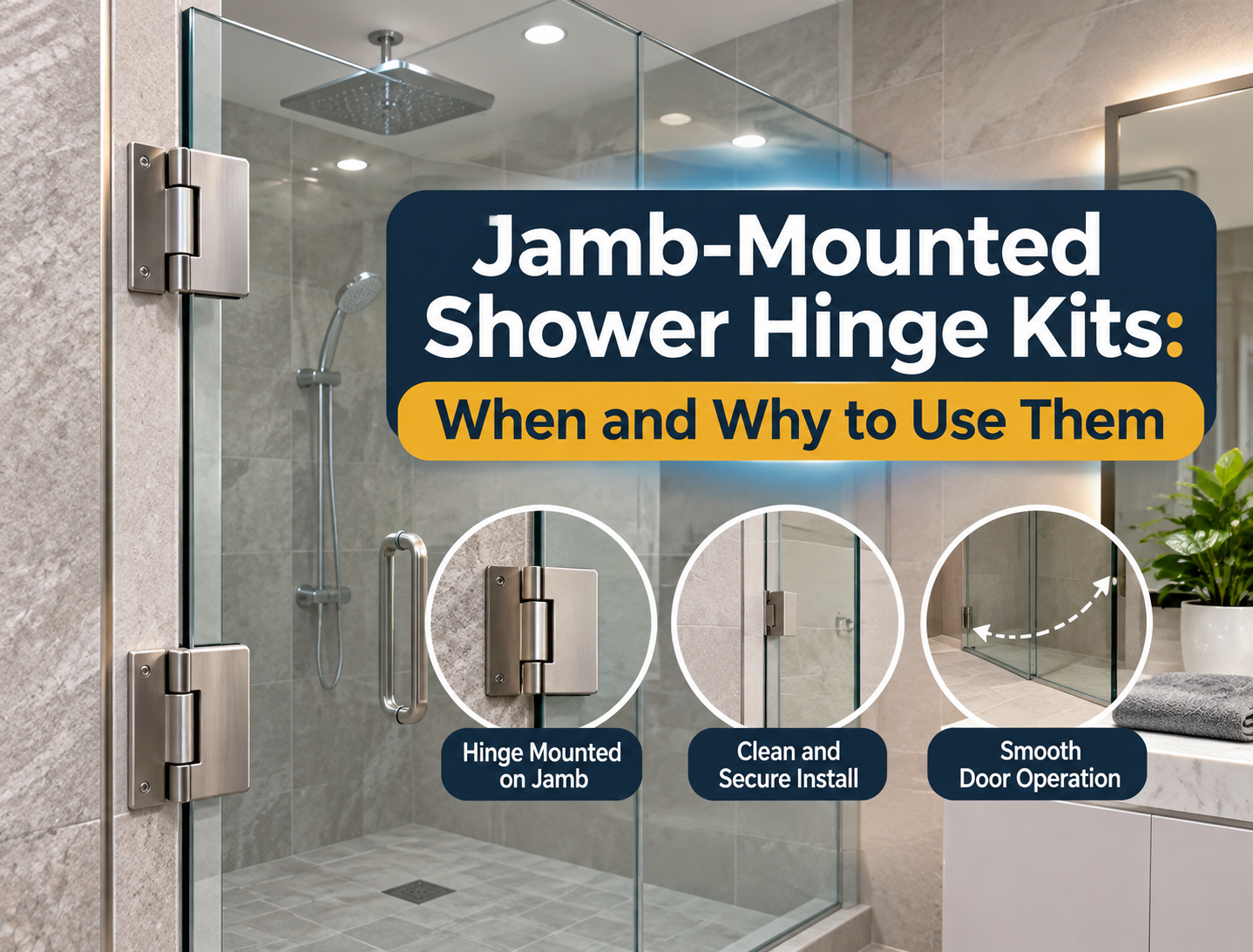


A jamb-mounted shower hinge kit combines the door hinges with vertical jamb components, sealing materials and related installation hardware to create a coordinated shower-door system. Unlike an installation that uses two exposed wall-mount hinges and separately selected seals, a jamb-mounted shower hinge attaches the door through a finished vertical assembly and provides a more integrated approach to mounting and water management. This type of kit is useful when a project needs a clean framed edge, predictable seal contact and compatible components packaged for a specific glass thickness and opening height.
What Is a Jamb-Mounted Shower Hinge?
A jamb-mounted hinge system uses an aluminum hinge jamb secured to the wall, with the glass-door hinges positioned through or along that jamb assembly. A corresponding strike jamb with vinyl receives the closing side of the door, while a bottom wipe or drip rail helps manage water at the threshold. The result is not a completely hardware-free frameless opening, but it can preserve the open appearance of heavy glass while adding the practical benefits of continuous jambs and coordinated seals.
The jamb assembly also distributes the attachment along a vertical wall area, although suitable backing and secure fasteners are still required. It should not be confused with a continuous piano hinge, because the kit uses individual glass hinges within a jamb-based system. It is also different from a basic framed shower door, since the large glass surfaces can remain visually open and minimally obstructed.
What Comes With the Venice Jamb-Mounted Kit?
The Venice hinge kit is designed for 3/8-inch or 1/2-inch tempered glass and uses 78-inch jamb assemblies. It includes the hinges, extrusion and vinyl sealing components needed for the coordinated installation. Five-degree hinge pins help position the door against the seals, but accurate measurement and fabrication remain necessary for the system to operate correctly.
| Component or Specification | Venice Kit Details |
|---|---|
| Compatible glass | 3/8-inch or 1/2-inch tempered glass |
| Hinge jamb | 78 inches |
| Strike jamb | 78 inches |
| Bottom drip rail | 36 inches |
| Closing feature | 5-degree hinge pins |
| Glass edge style | Square |
| Included system parts | Hinges, extrusion, vinyl seal and mounting components |
| Width calculation | Overall opening width minus 15/16 inch |
| Height calculation | Jamb height minus 7/16 inch for bottom clearance |
These formulas provide a technical starting point, not a substitute for field verification. Wall conditions, curb slope, finished surfaces and any material removed from the jamb can change the final fabrication dimensions. The installer should use the current product template and instructions associated with the exact kit before releasing the tempered glass order.
When a Jamb-Mounted System Makes Sense
A jamb-mounted system is useful when water control is a high priority and the design can accommodate visible vertical jambs. The strike-side vinyl creates a defined closing surface, while the hinge jamb and bottom drip rail help manage the gaps that would otherwise require separately selected seals. This can be particularly valuable in tub enclosures, guest bathrooms and remodeling projects where the showerhead position makes an entirely open frameless edge less practical.
The system can also simplify hardware coordination because the hinges, jambs and seals are designed to work together. Contractors do not have to independently match a wall hinge, strike seal and bottom sweep from unrelated systems. This coordination reduces selection errors, but it does not remove the need to verify the finished opening, glass thickness, door capacity and available wall backing.
Door Capacity Depends on Glass Thickness
The Venice system can accommodate both 3/8-inch and 1/2-inch tempered glass, but the maximum door width changes with glass weight. Published system data identifies a maximum 100-pound door with two hinges, with a width limit of 36 inches for 3/8-inch glass and 30 inches for 1/2-inch glass. Both weight and width limits must be respected because the thicker glass reaches the weight limit with a narrower door.
This difference is important when a designer selects 1/2-inch glass for its substantial appearance. A door may fit the opening visually but still exceed the permitted width or weight for the jamb-mounted system. Contractors should calculate the finished glass weight, include the intended handle and verify the current technical documentation before confirming the door size.
Jamb-Mounted Kits vs Individual Wall-Mount Hinges
Individual wall-mount hinges create a more fully frameless appearance because only the hinge plates are visible along the wall. They also allow the installer to choose separate seals and stops for the particular enclosure. Daltex’s back plate guide explains how individual hinge plate configurations interact with tile, glass position and available mounting space.
A jamb-mounted kit places more visible material along the wall and closing edge, but it offers a coordinated sealing system and a defined door interface. It may be the more practical choice when water management and repeatable component compatibility matter more than achieving the least possible amount of metal. The decision should therefore consider the shower layout, appearance, maintenance expectations and exposure to direct water spray.
Measurement and Fabrication Require Care
The opening should be measured after the tile, stone, curb and other finished surfaces are complete. Measurements should be taken at several heights because walls can be out of plumb, and the curb should be checked for level and drainage slope. The final glass dimensions must follow the kit formula and account for any jamb trimming performed during installation.
The product documentation places the top and bottom hinge cutouts at defined locations and requires the appropriate fabrication template. If material is removed from the top of the jamb, the related hinge location must be adjusted by the same amount. Because tempered glass cannot be recut after processing, the person preparing the glass order should confirm the final jamb length, hinge centers and door clearance before fabrication.
Installation Conditions to Confirm
A jamb-mounted kit still needs strong wall attachment, so the installer should identify framing, blocking or another approved structural mounting surface behind the finished wall. Tile alone should not be expected to carry the long-term weight and movement of a glass shower door. Fastener selection must also be appropriate for the wall construction and should follow the hardware manufacturer’s instructions.
The installer must keep the jamb plumb, align both hinges accurately and confirm that the door closes against the vinyl without excessive pressure. Over-tightening clamps or using power tools where prohibited can damage hardware, gaskets or glass. The hinge quantity guide provides additional context on why door width, weight and manufacturer limits must be evaluated together.
When a Jamb-Mounted Kit May Not Be Ideal
A jamb-mounted system may not be the best choice when the design requires an almost invisible glass-to-wall connection or when the opening height differs substantially from the kit’s available jamb length. It may also be unsuitable when there is no reliable wall backing, the finished opening is extremely irregular or the desired door dimensions exceed the published capacity. In these cases, an individual hinge system, pivot configuration or custom enclosure layout may provide a better solution.
Replacement planning should also be considered because a jamb kit contains several coordinated pieces. Keeping the original item number and fabrication documents makes future service easier if a hinge, vinyl or drip component needs attention. Daltex’s replacement parts guide explains what measurements and photographs help identify existing shower hardware.
Selecting the Right System for a DFW Project
For Dallas-Fort Worth contractors and homeowners, a jamb-mounted kit can provide a practical balance between a frameless-glass appearance and controlled door sealing. The Venice system is especially relevant when the project uses 3/8-inch or 1/2-inch tempered glass, needs a 78-inch jamb assembly and can remain within the applicable width and weight limits. Hardware finish, glass fabrication and wall conditions should all be confirmed before the order is placed.
Daltex can help coordinate shower hardware with fabricated glass for residential and commercial bathroom projects. Discussing the complete opening through custom shower enclosures helps ensure that the jamb kit, glass thickness, door dimensions and surrounding support conditions are compatible.
Frequently Asked Questions
1. What is included in a jamb-mounted shower hinge kit?
A complete kit generally includes a hinge jamb, compatible glass hinges, a strike jamb with vinyl, a bottom wipe or drip rail and mounting hardware. The exact contents vary by manufacturer and model, so the product list should be checked before ordering. Handles, glass and some installation materials may need to be purchased separately.
2. Is a jamb-mounted shower door completely frameless?
A jamb-mounted system uses large frameless-style glass surfaces, but it includes visible vertical jambs along the hinge and strike sides. It is therefore better described as a hybrid or semi-frameless configuration rather than a completely frameless door. The added jambs provide attachment and sealing benefits that an open-edge design does not provide in the same way.
3. Can the Venice kit be used with 1/4-inch glass?
The referenced Venice kit is intended for 3/8-inch or 1/2-inch tempered glass. A 1/4-inch panel should not be installed by adding makeshift gaskets or modifying the hinge clamps. A hinge system specifically engineered for 1/4-inch glass should be selected instead.
4. Can a 78-inch jamb kit be cut shorter?
Many jamb assemblies can be trimmed according to the manufacturer’s instructions, but shortening the jamb changes the relationship between its top and the hinge cutout. The fabrication dimensions must be adjusted by the amount removed from the jamb. The installer should confirm the revised measurements before the glass is cut and tempered.
5. Are jamb-mounted shower hinge kits waterproof?
No shower-door hinge kit should be considered completely waterproof. Jambs, vinyl seals and the bottom drip rail can improve water resistance, but performance still depends on correct installation, curb slope, door alignment and showerhead direction. The enclosure should be designed to manage normal water exposure rather than contain pressurized spray directed at the gaps.
6. Does a jamb-mounted kit require wall backing?
Yes, the hinge jamb must be attached to a structurally suitable wall surface because it supports the moving glass door. Tile, drywall or decorative panels alone are not dependable structural backing. Blocking, framing or another approved anchoring method should be confirmed before installation.


