

Low-E, Tinted and Reflective Glass: Which Option Is Best?
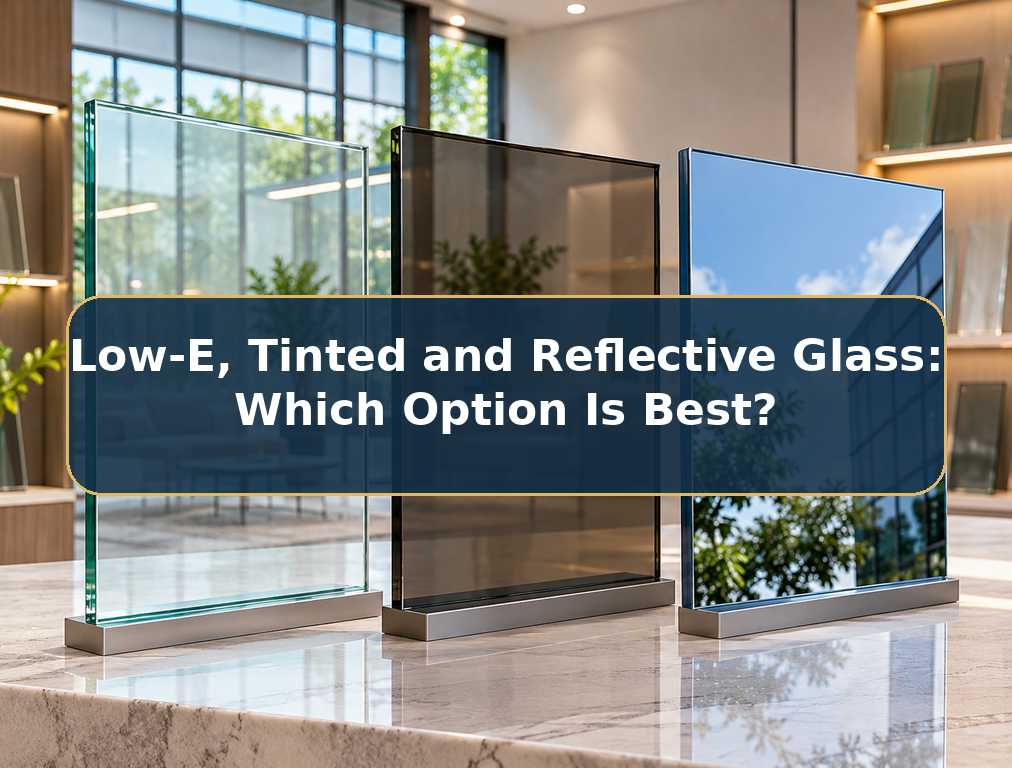


Low-E, tinted and reflective glass can all influence solar heat, daylight, glare and building appearance, but they do not accomplish these goals in the same way. Low-E glass uses a thin coating to manage radiant heat transfer, tinted glass changes solar and visible-light transmission through the glass substrate, and reflective glass sends a greater portion of visible light and solar energy back toward the exterior. The best energy efficient glass depends on the climate, elevation, window system and required visual result.
These categories can also overlap. A Low-E coating may be applied to a tinted substrate, while certain solar-control coatings produce a noticeably reflective appearance. Instead of selecting glass from a general label, architects, contractors and property owners should compare tested performance values for the complete glazing makeup.
Quick Comparison of Low-E, Tinted and Reflective Glass
No single option provides the best result for every opening. A nearly clear Low-E product may suit a residential window where daylight and exterior views are important, while reflective glass may support a commercial facade requiring stronger glare control and a particular exterior appearance. Tinted glass can provide color and solar control but may reduce interior daylight.
| Consideration | Low-E glass | Tinted glass | Reflective glass |
|---|---|---|---|
| Primary function | Controls radiant heat transfer and solar gain | Absorbs portions of solar energy and visible light | Reflects portions of solar energy and visible light |
| Typical appearance | Clear, neutral or subtly colored | Gray, bronze, green, blue or another body tint | More noticeable exterior reflectivity |
| Daylight | Can preserve relatively high visible light | Usually reduces visible light as tint becomes darker | Often reduces visible transmission |
| Glare control | Depends on the selected coating | Moderate to strong depending on tint | Often strong, depending on reflectivity |
| Exterior privacy | Limited with highly transparent products | Varies with tint and lighting | Greater during daylight when exterior is brighter |
| Common use | Residential and commercial insulated glass | Architectural facades and solar-control glazing | Commercial buildings and design-focused facades |
| Performance selection | U-factor, SHGC and visible transmittance | SHGC, visible transmittance and absorption | SHGC, visible transmittance and reflectance |
What Is Low-E Glass?
Low-E stands for low emissivity. A microscopically thin coating is applied to a glass surface to reduce radiant heat transfer while allowing a selected amount of visible light to pass through. Different Low-E products are engineered for low, moderate or higher solar gain, so the term does not describe one universal performance level.
In a hot climate, solar-control Low-E glass can reduce unwanted heat gain while maintaining more daylight than many dark tints. In cooler climates, another coating or surface position may be chosen to retain interior heat while allowing useful solar energy. Daltex’s comparison of Low-E glass explains why coating selection should reflect the Texas climate and building orientation.
What Is Tinted Glass?
Tinted glass contains color within the glass substrate. Common architectural choices include gray, bronze, blue and green, although the exact appearance varies by manufacturer and thickness. The tint absorbs portions of visible light and solar energy, which can reduce brightness and glare inside the building.
Darker glass is not automatically more energy efficient. A dark tint may lower visible transmission while still providing a different SHGC than a high-performance Low-E coating. Thermal absorption should also be evaluated because the fabricator may need to determine whether heat treatment or another glass makeup is appropriate.
What Is Reflective Glass?
Reflective glass uses a coating that increases the amount of visible light and solar energy reflected from the surface. It can create a uniform exterior appearance and reduce glare or solar gain. Commercial offices, retail buildings and other large facades may use reflective products when exterior design and daytime privacy are important.
Reflective glass does not provide equal privacy under every lighting condition. At night, a brightly illuminated interior can become more visible from the darker exterior. Window treatments or other privacy measures may still be needed when continuous privacy is required.
The Performance Values That Matter
Energy-efficient glass should be compared through tested values rather than appearance alone. U-factor measures heat transfer through the complete window or glazing assembly, while solar heat gain coefficient measures the fraction of solar energy entering the building. Visible transmittance describes how much daylight passes through, and reflectance describes how much visible light is returned from the surface.
| Performance value | What it indicates | General selection goal in hot climates |
|---|---|---|
| U-factor | Rate of heat transfer through the complete assembly | Lower values generally indicate better insulation |
| SHGC | Fraction of solar heat entering through the glazing | Lower values generally reduce unwanted solar gain |
| Visible transmittance | Amount of visible daylight passing through | Balance daylight with glare and cooling requirements |
| Exterior reflectance | Amount of visible light reflected outside | Match facade appearance and visibility goals |
| Interior reflectance | Amount of visible light reflected inside | Avoid unwanted nighttime mirror effects |
| Light-to-solar gain ratio | Daylight admitted relative to solar heat | Higher values can provide daylight with less heat gain |
The frame, spacer, gas fill, edge seals and installation also affect complete window performance. A high-performance glass product inside a poorly designed frame may not produce the expected whole-window result. Daltex’s guide to Texas heat explains how the glass and surrounding window system work together.
Which Option Is Best for Texas Buildings?
Cooling demand is a major consideration in Dallas-Fort Worth and other warm-climate markets. A solar-control Low-E insulated unit is often a strong starting point because it can reduce solar heat gain while preserving useful daylight. The exact coating should still be selected according to elevation, glass area, shading and interior use.
Tinted glass may be appropriate when the design requires a specific color or additional glare reduction. Reflective glass can suit commercial facades that need stronger visual uniformity, lower visible transmission or greater daytime exterior privacy. A combination of tint and Low-E coating may provide the required appearance and performance when one product alone does not meet the project goals.
Residential Applications
Residential projects generally benefit from natural light, clear views and a neutral exterior appearance. A spectrally selective Low-E product can provide solar control without making rooms unnecessarily dark. Tinted or highly reflective glass may be less desirable when homeowners want maximum daylight and natural color rendering.
Bedrooms, bathrooms and street-facing windows may have additional privacy or glare requirements. These should be addressed through the complete window design rather than assuming one glass treatment solves every concern. Interior shades, exterior shading and window orientation also affect comfort.
Commercial Applications
Commercial facades may prioritize cooling performance, glare management, branding, exterior uniformity and occupant comfort across large glazed areas. Tinted and reflective products give designers more control over color and reflectance, while modern Low-E coatings can provide high solar performance with a neutral or subtly reflective appearance. Different elevations may require different glass makeups because east, west, south and shaded exposures receive different solar loads.
Large projects should review physical samples and full-size mockups before approving a prominent facade. Digital images cannot reliably reproduce glass color, reflectivity or interaction with the sky and surrounding buildings. Daltex’s commercial windows can combine insulated glass, coatings, tints and compatible aluminum systems for project-specific openings.
Can Low-E, Tint and Reflective Coatings Be Combined?
Yes, an insulated glass unit may combine a tinted outer lite with a Low-E coating on an approved surface. This can provide a particular exterior color, glare control and improved thermal performance. Some Low-E products also create a reflective appearance without requiring a separate traditional reflective coating.
The combined makeup must be evaluated as a complete unit. Glass thickness, heat treatment, coating location, cavity, spacer, gas fill and frame all influence performance. Daltex’s guide to IGU options explains the main insulated-glass configurations available for commercial and residential use.
Avoid Selecting Glass by Color Alone
Two glass products with similar colors can have different SHGC, visible transmittance and reflectance values. Likewise, a nearly clear Low-E coating may provide stronger solar control than a darker-looking basic tint. Product data should therefore be reviewed before the appearance is approved.
Orientation should also be considered because the same product can look different on a shaded elevation and a facade facing direct sun. Interior lighting, exterior surroundings and sky reflection affect the final appearance. Samples should be viewed in conditions similar to the intended installation whenever possible.
Energy-Efficient Glass Fabrication in Dallas-Fort Worth
Daltex manufactures insulated glass and supplies custom glazing for Dallas-Fort Worth commercial and residential projects. Its glass services include Low-E coatings, tints, reflective products, argon fills, warm-edge spacers and laminated components. The final specification can be coordinated with the opening, framing system and required safety treatment.
Contractors should provide the target U-factor, SHGC, visible transmittance, tint, reflectance and overall unit thickness when these values are specified. If the design criteria remain open, the building type, orientation and appearance goals can help narrow the available options. Final approval should use current product data for the complete glass makeup.
Final Takeaway
Low-E glass is often the most versatile energy efficient glass because it can reduce radiant heat transfer and solar gain while maintaining useful daylight. Tinted glass is valuable when color and glare reduction are priorities, while reflective glass can provide stronger facade reflectivity and daytime visual screening. The best choice may combine these technologies within an insulated glass unit designed for the building’s climate, orientation, framing and appearance.
Frequently Asked Questions
1. Is Low-E glass better than tinted glass?
Low-E glass often provides better solar control while preserving more visible light, but the result depends on the specific products being compared. Tinted glass may be preferable when color and glare reduction are important design goals.
2. Does reflective glass provide privacy at night?
Reflective glass provides stronger visual screening when the exterior is brighter than the interior. At night, interior lighting can make occupants and objects more visible from outside.
3. Is darker glass always more energy efficient?
Darker appearance does not automatically indicate a lower SHGC or better U-factor. Tested performance data should be used to compare glass products rather than color alone.
4. Can tinted glass also have a Low-E coating?
Yes, tinted glass and Low-E coatings can be combined in an approved insulated glass makeup. The combination may provide color, glare control and improved thermal performance.
5. What glass is best for the Texas heat?
A low-SHGC solar-control Low-E insulated unit is often a practical starting point for Texas buildings. The exact product should be selected according to orientation, glass area, daylight goals and the complete window system.
6. Does energy-efficient glass work without an insulated unit?
Some tints and coatings can change solar performance on monolithic glass, but an insulated unit adds a sealed cavity that improves thermal performance. The frame, spacer, gas fill and installation also influence the complete result.


