

Blog
Low-E vs Clear Insulated Glass in Texas

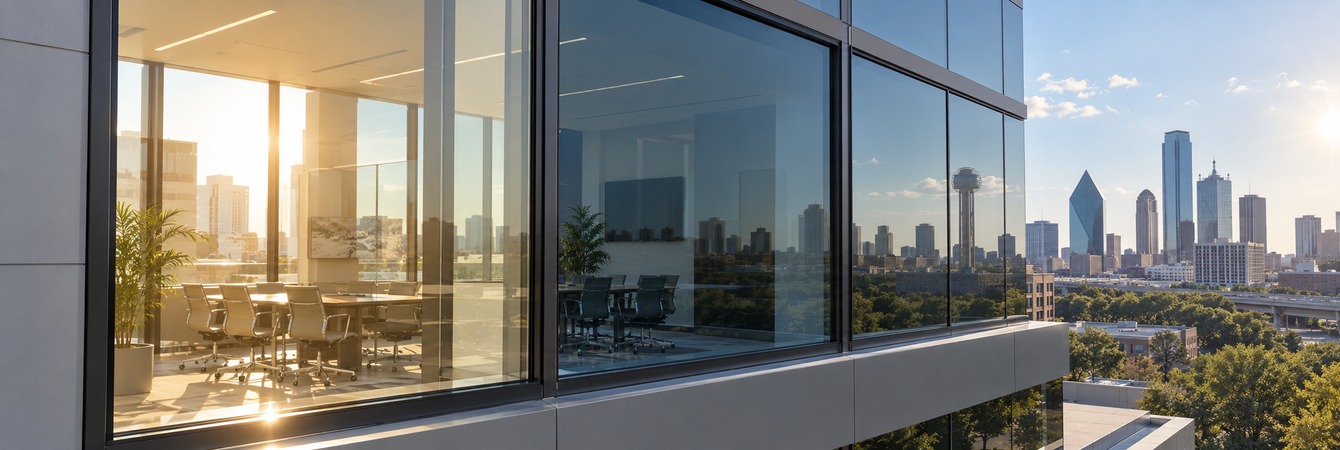


Choosing between Low-E and clear insulated glass affects how much solar heat and visible light pass through a window. Both options use multiple panes to improve thermal performance, but the addition of a Low-E coating changes how the glass interacts with radiant heat.
In Texas, where buildings can experience intense sunlight and substantial cooling demand, solar heat gain is often a central part of the glass specification. However, Low-E glass is not automatically the correct choice for every opening. Window orientation, building use, appearance, budget, frame performance and project requirements must all be considered.
This guide compares Low-E vs clear insulated glass in Texas and explains where each option may be suitable.
What Is Clear Insulated Glass?
Clear insulated glass is an insulated glass unit made with two or more clear panes separated by a sealed cavity. The cavity may contain dry air or an insulating gas such as argon.
Even without a Low-E coating, a double-pane clear unit generally provides better thermal resistance than a single pane. The additional pane and sealed space slow heat transfer through the glass.
Clear insulated glass allows a high level of visible light and maintains a relatively neutral appearance. It may be used where transparency, natural colour and initial cost are higher priorities than additional solar control.
What Is Low-E Insulated Glass?
Low-E stands for low emissivity. Low-E insulated glass includes a thin coating on one of the glass surfaces within the unit.
The coating is designed to control radiant heat transfer while allowing visible light to pass through. It is generally placed on a protected surface inside the sealed unit, where it is less exposed to cleaning, weather and physical contact.
Low-E coatings are available in different performance levels. Some allow more solar heat to pass through, while others are designed to reduce solar gain more aggressively.
The U.S. Department of Energy explains that Low-E coatings can manage U-factor, solar heat gain and visible-light transmission. Different coatings are therefore suited to different climates and building requirements.
Low-E vs Clear Insulated Glass: Key Differences
| Factor | Clear Insulated Glass | Low-E Insulated Glass |
|---|---|---|
| Glass construction | Two or more clear panes with a sealed cavity. | Two or more panes with a Low-E coating on a selected surface. |
| Visible appearance | Clear and generally colour-neutral. | May have a subtle tint or reflective appearance, depending on the coating. |
| Solar-heat control | Allows more solar heat through in a typical clear configuration. | Can reduce solar heat gain when the appropriate coating is selected. |
| Thermal performance | Better than basic single-pane glass. | Can provide additional control of radiant heat transfer. |
| Visible light | Usually allows a high level of visible light. | Varies by coating; spectrally selective products can preserve daylight while limiting solar heat. |
| Initial cost | Usually lower than a comparable Low-E unit. | Usually costs more because of the coated glass. |
| Common applications | Interior glazing, shaded elevations and projects prioritising maximum clarity. | Exterior windows, storefronts and façades exposed to significant sunlight. |
| Specification | Glass type, thickness, cavity and gas fill must be selected. | The same details plus coating type and coated-surface position must be specified. |
Actual performance varies by product and complete window assembly. The table describes general differences and should not replace project-specific performance data.
Why Does Solar Heat Gain Matter in Texas?
Sunlight contains visible light and infrared energy. When solar energy passes through a window, it can increase the temperature inside the building.
This can be especially noticeable on large west-facing and south-facing glazed areas that receive strong afternoon or extended sunlight. Storefronts, offices, restaurants and homes with large exterior windows may experience greater heat near these openings.
Solar Heat Gain Coefficient, known as SHGC, indicates how much solar heat passes through a complete window system. The scale runs from 0 to 1. A lower number means that less solar heat is transmitted.
The Department of Energy recommends lower-SHGC products for warm climates where reducing unwanted heat gain is important. It also explains that spectrally selective Low-E coatings can reduce solar heat while maintaining useful visible light.
The correct SHGC should still be determined from the project requirements, building design and applicable energy code.
What Is U-Factor?
U-factor measures how readily heat moves through a window assembly. A lower U-factor indicates less heat transfer.
The value normally applies to the complete window, including the glass, spacer and frame. A centre-of-glass value should not be treated as the performance of the entire installed window.
Both clear and Low-E insulated units can reduce U-factor compared with basic single-pane glass. Low-E coatings can further reduce radiant heat transfer, but the complete result also depends on:
- The number of panes.
- The space between the panes.
- Air or gas fill.
- Spacer design.
- Glass thickness.
- Frame material.
- Thermal breaks.
- Installation quality.
For commercial projects, the glass schedule or architectural specification should identify the required U-factor and SHGC instead of relying only on the words “double pane” or “Low-E.”
Does Low-E Glass Make a Building Dark?
Not necessarily. Low-E glass is available with different levels of visible-light transmission.
Some coatings reduce solar heat while still allowing a substantial amount of daylight into the building. Other coatings have a darker or more reflective appearance because they are designed for stronger solar control or a specific architectural effect.
Visible Transmittance, usually shown as VT, measures the portion of visible light that passes through the glazing. A higher VT generally means more daylight.
When comparing products, review SHGC and VT together. Selecting only the lowest SHGC without considering visible light may create an interior that is darker than intended.
A physical glass sample or mock-up can help architects, contractors and property owners evaluate colour, reflectivity and daylight before placing a large order.
When Is Low-E Insulated Glass a Good Choice?
Low-E insulated glass may be suitable for:
- Exterior windows receiving substantial direct sunlight.
- Large commercial façades.
- West-facing and south-facing openings.
- Air-conditioned offices and retail spaces.
- Storefronts where indoor comfort is a priority.
- Residential windows exposed to strong sun.
- New projects with defined energy-performance requirements.
- Replacement projects upgrading older clear or single-pane glass.
Daltex supplies and installs commercial windows and exterior glass doors with insulated glass selected according to the opening and project specification.
Low-E may also be useful in storefront systems, but coating appearance should be coordinated across every panel. Using mismatched coatings or glass from different production runs can create visible colour differences across a façade.
When Can Clear Insulated Glass Be Suitable?
Clear insulated glass may remain appropriate when:
- The opening receives limited direct sunlight.
- A canopy, surrounding building or permanent shade controls solar exposure.
- Maximum transparency is a primary design objective.
- The glass is used in an interior conditioned space.
- Existing adjacent glass must be matched.
- The project specification does not require additional solar control.
- Initial material cost is an important consideration.
- The complete window system already meets the required performance.
Clear glass should not be selected solely because it costs less. The effect of heat gain, glare, comfort and long-term building operation should also be considered.
Which Glass Is Better for Commercial Storefronts?
The answer depends on the storefront’s orientation, size and use.
A small shaded storefront may perform acceptably with clear insulated glass. A large west-facing restaurant or retail façade may benefit from a Low-E coating that limits afternoon solar heat.
Other storefront factors include:
- Desired colour and exterior reflectivity.
- Visibility of merchandise from outside.
- Indoor glare.
- Safety-glazing requirements.
- Whether the unit must be tempered or laminated.
- Frame depth and thermal performance.
- Local code and landlord criteria.
- Consistency with neighbouring glass.
Daltex supplies and installs commercial storefronts and entrances across Dallas-Fort Worth. Glass, aluminum framing and hardware can be coordinated as part of the same system.
Which Option Is Better for Residential Windows?
Low-E insulated glass is commonly considered for exterior residential windows exposed to Texas sunlight. It may help control solar heat while maintaining natural light when the appropriate coating is selected.
Clear insulated glass may be suitable for shaded windows, selected architectural applications or situations where it must match surrounding glazing.
Homeowners should compare complete window ratings rather than relying only on glass descriptions. ENERGY STAR advises selecting windows according to the climate zone where they will be installed and evaluating both U-factor and SHGC.
Can Low-E Glass Be Tempered or Laminated?
A Low-E coated pane can be incorporated into an IGU with tempered or laminated glass when the selected products and manufacturing process are compatible.
Tempered glass may be required in doors, areas close to walking surfaces and other safety-glazing locations. Laminated glass may be specified for security, sound control, overhead glazing or glass-retention requirements.
The Low-E coating does not replace these safety considerations. Coating performance and safety-glazing requirements must be specified separately.
All cutting, drilling, notching and edge processing must be completed before glass is tempered.
Does Argon Gas Replace the Need for Low-E Glass?
No. Argon and Low-E coatings perform different functions.
Argon reduces conductive and convective heat transfer within the cavity. A Low-E coating controls radiant heat transfer across the glass surfaces.
They can be used together in the same insulated glass unit. However, not every project requires the same combination, and the cavity width must be appropriate for the selected gas.
Can Existing Clear Glass Be Upgraded to Low-E?
A Low-E coating cannot normally be added to the protected internal surface of an already sealed IGU. Upgrading usually requires manufacturing and installing a new insulated glass unit.
The existing frame should be inspected to confirm that it can accept the new unit’s thickness and weight. The glazing pocket, setting blocks, seals and drainage system must also remain suitable.
If a current unit is cloudy or has moisture between the panes, the cause is likely seal failure. The article about why double-pane windows fog explains how to identify this problem.
Questions to Ask Before Ordering Glass
Before selecting clear or Low-E insulated glass, confirm:
- Where will the glass be installed?
- Which direction does the opening face?
- How much direct sunlight reaches it?
- What U-factor and SHGC are required?
- How much visible light should pass through?
- Is a particular colour or reflective appearance required?
- Must the glass be tempered or laminated?
- Will the new unit need to match adjacent glazing?
- Can the existing frame accept the required thickness?
- Is the project supply-only or does it require installation?
Answering these questions helps the manufacturer prepare an accurate specification and quotation.
Frequently Asked Questions
Is Low-E glass always better than clear insulated glass in Texas?
Low-E glass often provides useful solar control in warm and sunny conditions, but the best option depends on orientation, appearance, performance targets and project requirements.
Can you see a Low-E coating?
Some coatings look almost clear, while others have a visible tint or reflective quality. Appearance varies by manufacturer and coating type.
Does clear double-pane glass block heat?
The two panes and sealed cavity reduce heat transfer compared with a basic single pane. However, typical clear glass allows more solar heat through than a solar-control Low-E configuration.
What is a good SHGC for Texas?
There is no single value for every Texas project. Climate zone, building type, window orientation and applicable energy requirements must be considered. Use the required whole-window rating from the project specification.
Does Low-E glass reduce fading?
Some Low-E products reduce portions of ultraviolet and solar energy that contribute to fading. Performance varies by product, and no architectural glass can guarantee that furnishings will never fade.
Does Low-E glass affect indoor plants?
The result depends on the coating’s visible-light transmission, plant species and window orientation. Review the selected product’s VT rating when daylight is important.
Can Low-E glass be used in a commercial storefront?
Yes, when the coating, safety glass, frame and appearance meet the storefront specification. Adjacent panels should be coordinated to maintain a consistent façade.
Is Low-E glass worth the additional cost?
Its value depends on solar exposure, project size, performance requirements and how the building is used. Compare the complete glass specification and expected performance rather than initial cost alone.
Low-E and Clear Insulated Glass in Dallas-Fort Worth
Low-E and clear insulated glass can both be appropriate, but they serve different project priorities.
Clear insulated glass provides a neutral appearance, high visible-light transmission and improved performance over basic single-pane glass. Low-E insulated glass adds a coating that can reduce radiant heat transfer and solar heat gain.
For Texas buildings, the decision should consider SHGC, U-factor, visible light, orientation, frame performance and applicable project requirements.
Daltex Glass manufactures insulated glass units and provides glass supply and fabrication for commercial and residential projects across Dallas-Fort Worth.
To discuss a clear or Low-E insulated glass specification, call 214-865-9961, email Or****@*********ss.com, or request a quote.


2 thoughts on “Low-E vs Clear Insulated Glass in Texas”