Blog
How Long Do Insulated Glass Units Last in Texas?

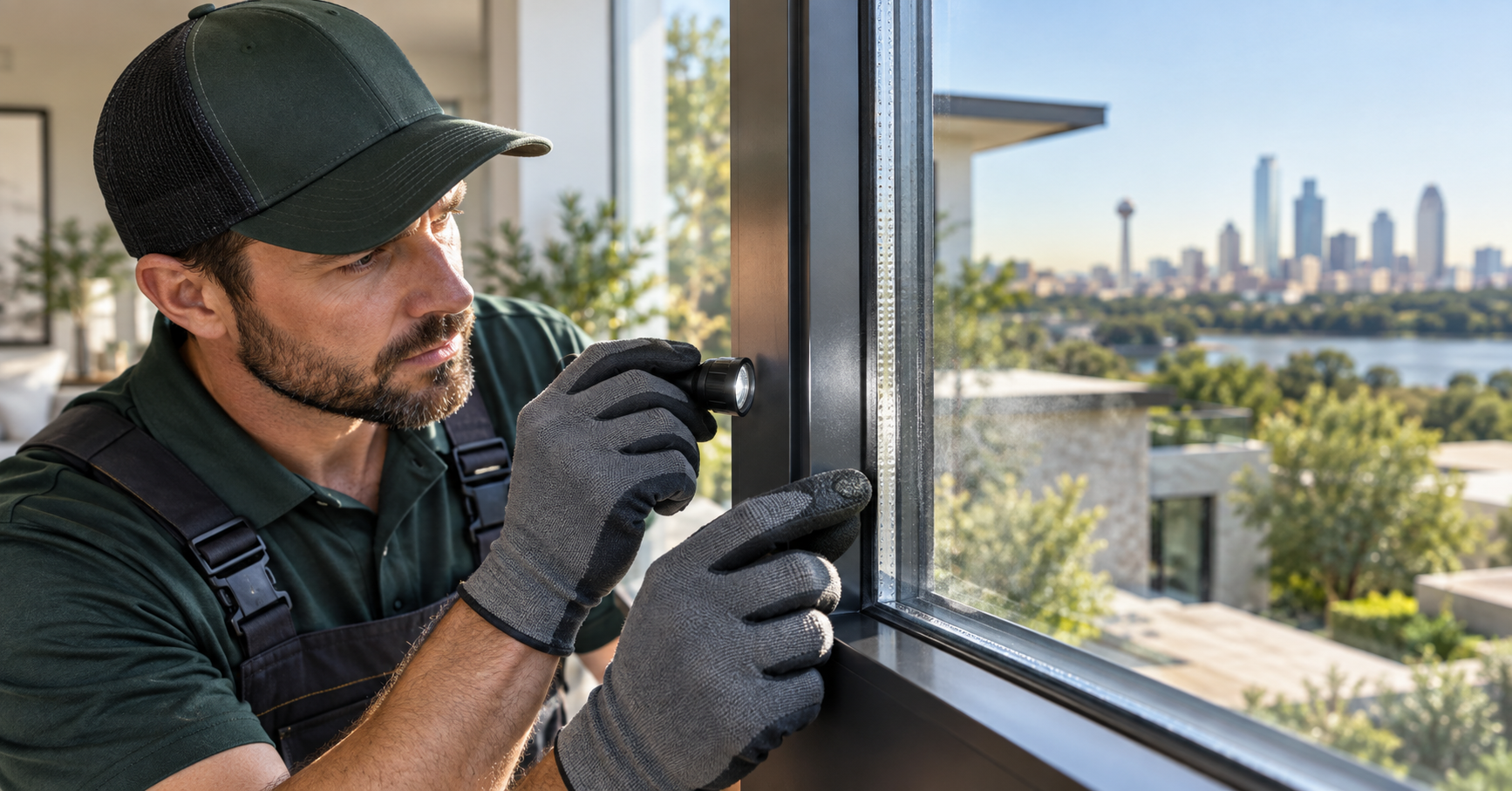


Insulated glass units typically last between 15 and 25 years. A well-manufactured unit that is correctly installed and protected from prolonged moisture may remain functional for longer. However, poor installation, frame movement, damaged edge seals and severe weather exposure can cause premature failure.
An insulated glass unit does not have a fixed expiration date. Its actual lifespan depends primarily on whether the perimeter seal continues to prevent moisture from entering the space between the panes.
What Determines the Lifespan of an Insulated Glass Unit?
An IGU contains two or more panes of glass separated by a spacer and sealed around the perimeter. The cavity may contain dry air or an insulating gas such as argon. Our guide to IGU construction explains how these components work together.
The glass panes themselves can remain intact for decades. The perimeter seal, spacer, desiccant, frame and installation conditions usually determine how long the complete unit performs as intended.
Average IGU Lifespan at a Glance
| Service period | What it may indicate |
|---|---|
| Less than 10 years | Possible premature failure caused by damage, fabrication or installation problems |
| 10 to 20 years | Performance depends heavily on exposure, seal quality and frame condition |
| 20 to 30 years | Achievable for well-made and properly installed units |
| More than 30 years | Possible when the seals, frame and drainage remain in good condition |
These ranges are general estimates rather than guarantees. Some units fail early, while others continue performing beyond their expected service period.
Certain manufacturers offer 20-year warranties on specific IGU systems, which demonstrates the potential durability of a properly engineered edge-seal system. However, a warranty period should not be treated as the exact lifespan of every unit.
Six Factors That Affect IGU Lifespan
1. Perimeter Seal Quality
The perimeter seal restricts moisture and air movement into the cavity. It may also help retain insulating gas.
Daily temperature changes cause the glass, spacer, sealants and frame to expand and contract. A durable seal system must accommodate this movement without separating from the glass or spacer.
Once the seal can no longer protect the cavity, moisture may enter and create condensation or a cloudy film.
2. Manufacturing Quality
Accurate manufacturing affects long-term performance. The panes must be properly cleaned, the spacer must be correctly positioned and the sealants must be applied consistently.
Contamination, insufficient sealant coverage or improper assembly can create weak points. The quality of the spacer, desiccant and primary and secondary seals also affects how long the unit performs.
3. Installation and Support
Even a properly manufactured unit can fail early when it is incorrectly installed.
Setting blocks should support the glass evenly and keep its edges away from standing water. Excessive pressure, insufficient clearance or a distorted frame can place continuous stress on the unit.
The glazing system must also allow water to drain. Blocked drainage paths can leave the perimeter seal exposed to moisture for extended periods.
4. Sunlight and Temperature Changes
Windows exposed to direct sunlight experience repeated heating and cooling. These temperature cycles cause the unit and surrounding frame to move.
This is particularly relevant in Dallas-Fort Worth, where exposed windows may experience intense sunlight and substantial heat. South-facing and west-facing elevations often receive the strongest solar exposure.
Selecting suitable Low-E glass options can improve solar and thermal performance. However, coating selection alone does not determine how long the perimeter seal will last.
5. Frame Condition
The IGU and frame operate as one system. A frame that is corroded, warped or out of square may place uneven pressure on the glass.
Damaged gaskets, failed exterior sealant and blocked drainage openings can also allow water to collect around the unit. Daltex Glass evaluates the frame and glass specifications together when working with commercial window systems.
6. Moisture Exposure
Prolonged exposure to liquid water or moisture vapor can contribute to seal deterioration and eventual IGU failure.
Windows should be installed with effective drainage and weather sealing so that rainwater moves away from the glass edge. Water that remains around the perimeter can place unnecessary stress on the seal system.
Signs That an Insulated Glass Unit Is Failing
Condensation Between the Panes
Moisture that appears inside the sealed cavity is the clearest sign of seal failure. It cannot be wiped from either the indoor or outdoor surface.
The appearance of fog between panes may change according to temperature and humidity. It can appear as mist, droplets, haze or a milky film.
A Permanent Cloudy Appearance
Mineral deposits and moisture inside the cavity may leave the glass cloudy even when visible condensation disappears. Cleaning the accessible surfaces will not remove deposits trapped between the panes.
Changes in Indoor Comfort
A failed unit may provide less thermal resistance than originally intended. Rooms near affected windows may feel warmer during summer or colder during winter.
Comfort problems can also result from frame leakage, deteriorated weatherstripping or insufficient insulation. The complete opening should therefore be inspected.
Cracks or Edge Damage
A cracked pane means the sealed assembly is no longer reliable. Chips near the glass edge are especially important because that area interacts directly with the spacer, seals and frame.
Deteriorated Gaskets or Sealant
Cracked gaskets or separated exterior sealant do not automatically confirm internal IGU failure. However, they may allow water to reach the unit’s edge and should be corrected before the surrounding glazing system deteriorates further.
Does Gas Loss Mean the IGU Has Failed?
Some insulating gas can gradually move through seal materials over time. This does not necessarily cause an immediate or complete loss of performance.
Visible moisture between the panes is more significant because it indicates that the sealed cavity has been compromised. The desiccant may absorb a limited amount of moisture initially, which means seal deterioration can begin before fogging becomes noticeable.
Can a Failed Insulated Glass Unit Be Repaired?
A failed sealed unit generally cannot be restored by applying caulk around the visible window frame.
Exterior sealant may correct a frame-level air or water leak, but it cannot remove moisture trapped between the panes or recreate the original factory-sealed cavity.
Drilling or venting methods may temporarily reduce the visible fog. They do not restore the original perimeter seal, gas fill or thermal performance. The durable solution is normally to replace the insulated glass unit.
Should You Replace the IGU or the Entire Window?
The complete window usually does not need replacement when only the insulated glass unit has failed.
Replacing only the IGU may be appropriate when:
- The frame remains square and structurally sound.
- The sash is operating correctly.
- The glazing pocket can accept the new unit.
- Water can drain properly from the system.
- The surrounding gaskets and seals can be renewed.
- There is no serious frame corrosion or deterioration.
Complete window replacement may be more practical when the frame is damaged, distorted or badly deteriorated. It may also be necessary when an older frame cannot accommodate the required insulated glass thickness.
Daltex Glass provides glass repair services for fogged and failed insulated units. Replacement glass can often be installed within the existing frame after its condition, dimensions and glass specifications have been confirmed.
How to Help Insulated Glass Units Last Longer
No maintenance routine can guarantee a specific lifespan, but protecting the complete glazing system can reduce avoidable stress.
- Keep window drainage openings clear.
- Repair damaged exterior sealant and gaskets.
- Address frame movement, corrosion or distortion promptly.
- Avoid allowing water to remain against the glass edge.
- Inspect exposed windows after storms or building work.
- Avoid striking the glass or frame with tools and equipment.
- Use cleaning products suitable for the glass coating.
- Have persistent condensation or frame leakage professionally assessed.
Pressure washing should be performed carefully around window edges. Concentrated water directed into glazing joints can force moisture into areas that normally remain protected.
Frequently Asked Questions
Can insulated glass units last 30 years?
Yes, some properly manufactured and installed units can last 30 years or longer. Actual performance depends on the edge-seal system, frame condition, drainage, climate and environmental exposure.
How long do double-pane windows last?
The insulated glass inside a double-pane window commonly lasts around 15 to 25 years. The frame, hardware and weatherstripping may have different service lives, so each component should be evaluated separately.
Does Low-E glass last as long as clear insulated glass?
Both can provide a long service life when correctly manufactured and installed. Low-E coating changes the thermal and solar performance of the glass, but overall durability still depends heavily on the perimeter seals and glazing system.
Does condensation mean I need a new window?
Condensation between the panes usually means the insulated glass unit needs replacement. Condensation on an accessible interior surface may instead be caused by indoor humidity and the temperature of the glass surface.
Can an IGU be replaced without removing the frame?
Yes, in many cases. A glass professional can remove the failed unit, confirm its dimensions and specifications, and install a replacement within the existing frame if the frame remains suitable.
Can a fogged insulated glass unit be resealed?
A fogged unit cannot usually be restored by adding sealant around the outside of the window. The moisture is trapped within the sealed cavity. Replacing the affected unit is normally the most durable solution.
Does the warranty show how long an IGU will last?
Not exactly. A warranty establishes the manufacturer’s coverage period and conditions. It does not guarantee that every unit will fail when the warranty ends or remain problem-free for that entire period.
Final Takeaway
Insulated glass units generally last between 15 and 25 years, although high-quality units can remain functional for considerably longer. Manufacturing quality, perimeter seals, installation, drainage, frame condition and environmental exposure all influence the final lifespan.
Fogging, moisture or permanent haze between the panes normally indicates seal failure. When the surrounding frame is still in good condition, replacing only the insulated glass unit is often the most practical solution.