

Blog
How Commercial IGUs Are Manufactured

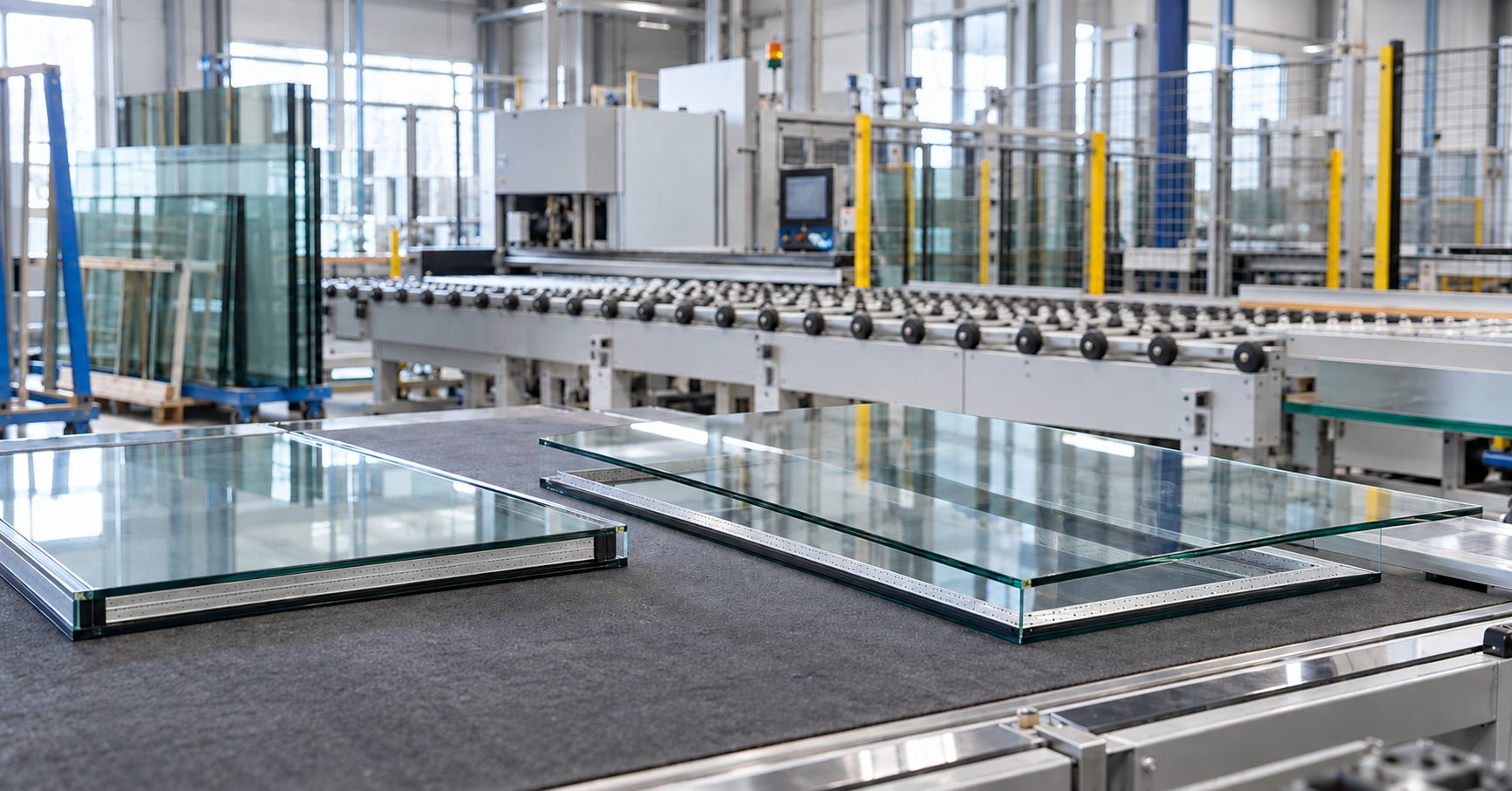


Commercial insulated glass units are manufactured by combining two or more carefully prepared glass panes with a spacer, sealed cavity and perimeter sealants. Depending on the project specification, the cavity may contain dry air or an insulating gas such as argon.
Every stage must be accurately controlled. Incorrect dimensions, contaminated glass, damaged coatings or incomplete edge seals can reduce the appearance, durability and thermal performance of the finished unit.
1. Reviewing the Glass Specifications
Manufacturing begins with a confirmed glass schedule or shop drawing. The fabricator reviews important details such as:
- Finished unit width and height
- Glass thickness
- Overall IGU thickness
- Cavity width
- Glass colour or tint
- Low-E coating requirements
- Tempered or laminated glass requirements
- Spacer type and colour
- Air or gas fill
- Edge-seal requirements
- Safety-glazing standards
Commercial projects may require different glass configurations for different elevations. Windows facing strong sunlight, for example, may need a different coating or tint from shaded openings.
The Daltex guide to IGU construction explains the main components found inside a sealed glass unit.
2. Cutting the Glass Panes
Large sheets of glass are cut according to the required dimensions. Computer-controlled cutting equipment may be used to improve accuracy and reduce material waste.
The cut panes must be square and correctly sized. Even a small dimensional error can affect installation clearance, spacer alignment and the fit of the unit within the frame.
If the specification requires tempered glass, necessary cutting, drilling and edgework must normally be completed before heat treatment. Tempered glass cannot be cut after tempering.
3. Processing and Inspecting the Glass
The glass edges may be seamed, polished or otherwise processed according to the application. Holes, notches or special shapes are completed before tempering when required.
Each pane is inspected for:
- Incorrect dimensions
- Scratches or chips
- Edge damage
- Coating defects
- Distortion
- Contamination
- Fabrication errors
The panes are then thoroughly washed and dried. Dust, oil, fingerprints or moisture left inside the cavity would remain visible after the unit is sealed.
Daltex provides glass fabrication for projects requiring custom dimensions, safety glass and specialised commercial configurations.
4. Preparing the Spacer
The spacer creates a consistent cavity between the panes. It may be manufactured from aluminium, stainless steel, foam or another warm-edge material.
The spacer is cut or formed to match the shape of the glass. Desiccant is incorporated into the spacer system to absorb limited residual moisture from inside the sealed cavity.
The corners and joints must be secure. Poorly formed corners can create weak points that affect the unit’s long-term seal performance.
5. Assembling the Glass and Spacer
The prepared spacer is positioned around the perimeter of the first glass pane. The second pane is then carefully aligned and placed over it.
Low-E coatings must face the correct surface within the unit. Their position influences solar control, thermal performance and protection from cleaning or environmental damage.
The panes are pressed together under controlled conditions to create a uniform overall thickness. Uneven pressure or poor alignment may cause visual problems or make the unit difficult to install.
6. Filling the Cavity
The cavity may contain dry air or an insulating gas such as argon. When argon is specified, the gas is introduced during the controlled manufacturing process.
Argon reduces conductive and convective heat transfer more effectively than air. However, the gas fill must work together with the Low-E coating, cavity width, spacer and frame to provide the intended performance.
The comparison of argon and air explains how each option affects commercial IGU performance.
7. Applying the Perimeter Seals
Many commercial IGUs use a dual-seal system. The primary seal restricts moisture and gas movement, while the secondary seal provides additional protection and structural support.
The specific sealant depends on the unit design and glazing application. Common options may include polyisobutylene for the primary seal and silicone, polyurethane or polysulfide for the secondary seal.
Sealant depth, adhesion and continuous coverage are important. Gaps or contamination around the edge can increase the risk of moisture entering the cavity.
8. Curing and Quality Inspection
After sealing, the unit may need time to cure before it is handled or shipped. The finished IGU is inspected for:
- Correct dimensions and thickness
- Spacer alignment
- Sealant coverage
- Glass cleanliness
- Internal contamination
- Scratches, chips or cracks
- Coating orientation
- Gas-fill requirements
- Visual distortion
- Order identification
Units that do not meet the required specifications should be corrected or remanufactured before delivery.
9. Packaging and Delivery
Completed units are labelled and packed to protect the glass, coatings and perimeter seals during transportation.
The IGUs should be stored and transported in a stable position with suitable separation between units. Edges must remain protected from impact, standing water and contact with materials that could damage the sealants.
Correct manufacturing is only part of the process. Professional handling and installation are also essential for commercial glass to perform as intended. Daltex supplies and installs commercial windows for projects throughout the Dallas-Fort Worth area.
Frequently Asked Questions
What materials are used in a commercial IGU?
A commercial IGU normally contains two or more glass panes, a spacer, desiccant, a sealed air or gas-filled cavity and perimeter sealants. It may also include Low-E coatings, tinted glass, tempered glass or laminated glass.
Are all commercial IGUs filled with argon?
No. Some units contain dry air, while others use argon or another insulating gas. The correct option depends on the required thermal performance and project specifications.
Can commercial IGUs use tempered glass?
Yes. Tempered or laminated safety glass may be used when required by building codes, location, unit size or project design.
Why must the glass be cleaned before assembly?
Any dust, fingerprints, oil or moisture inside the cavity will be permanently trapped after sealing. Thorough cleaning helps protect the appearance and performance of the finished unit.
How long does commercial IGU manufacturing take?
Production time depends on the unit size, glass type, coating, tempering requirements, quantity and complexity. Custom shapes and specialised configurations may require additional time.
Final Takeaway
Commercial IGUs are manufactured through a controlled process that includes specification review, glass cutting, washing, spacer preparation, cavity filling, perimeter sealing and quality inspection.
Accurate fabrication is essential, but the performance of the finished window also depends on proper transportation, framing, drainage and installation. Every component must work together to produce a durable and energy-efficient commercial glazing system.


One thought on “How Commercial IGUs Are Manufactured”