

Blog
How Insulated Glass Helps Buildings Handle the Texas Heat

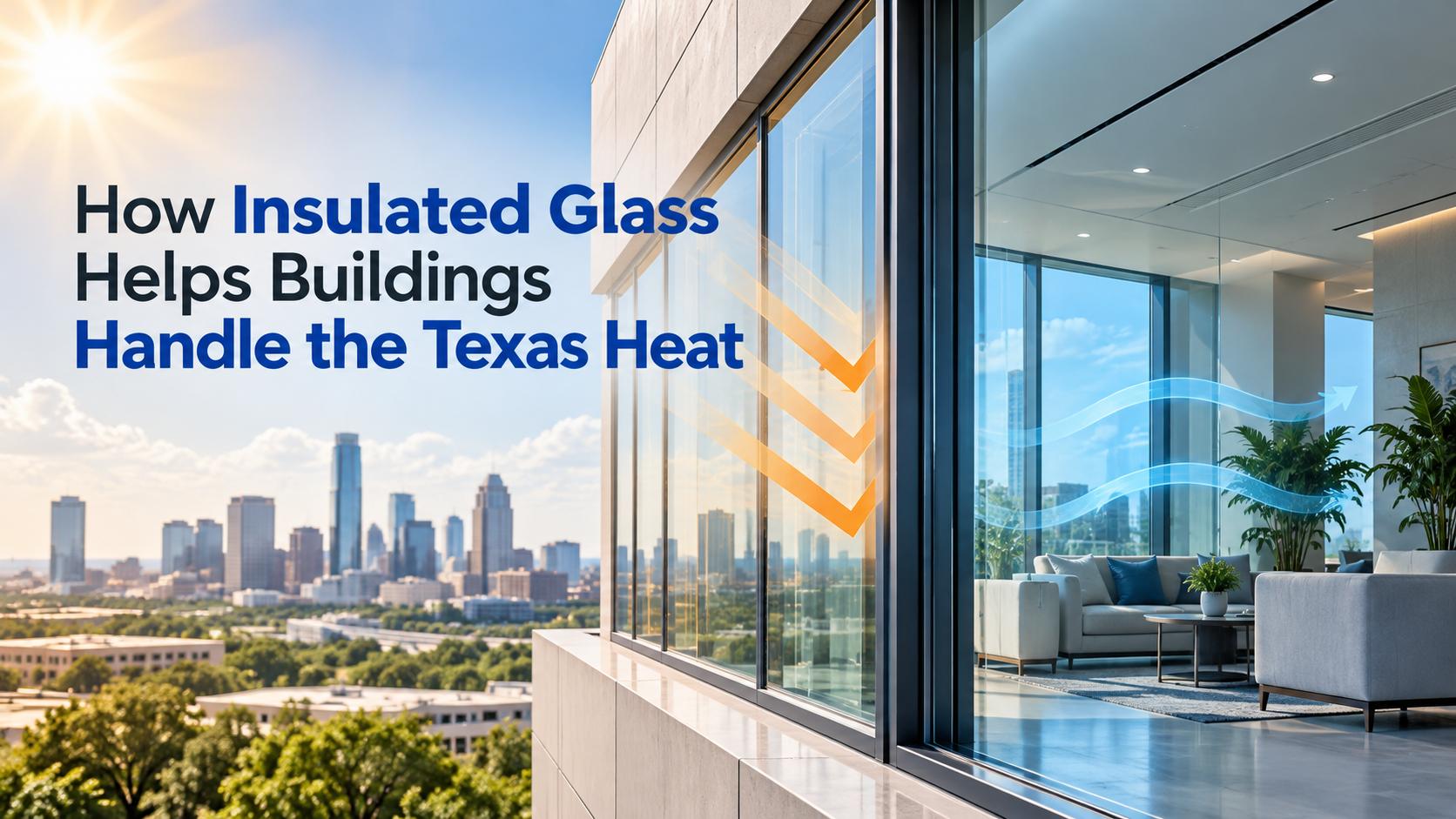


Insulated glass helps Texas buildings manage heat by slowing heat transfer through exterior windows and, when properly specified, reducing the amount of solar energy entering through the glazing. A standard insulated glass unit uses two or more panes separated by a sealed cavity, while higher-performing configurations may include Low-E coatings, argon gas, warm-edge spacers, tinted glass or reflective coatings. These components must be selected as a complete system because glass size, orientation, frame performance and building use can change how well a window performs under intense Texas sunlight.
An insulated glass unit does not prevent all heat from reaching the interior, and no single glass configuration is correct for every elevation. However, an appropriate IGU can provide better thermal control than basic single-pane glass while preserving useful daylight and exterior visibility.
How Heat Moves Through Exterior Glass
Heat reaches a building through conduction, radiation and air movement. Conductive heat transfer occurs when outdoor heat moves through the glass and framing materials. Solar radiation passes through the glazing and warms interior floors, furniture and other surfaces. Air leakage around poorly sealed windows can introduce additional warm air and humidity into conditioned spaces.
Insulated glass primarily improves the glazing portion of the assembly by separating the interior and exterior panes with a sealed cavity. This cavity reduces direct heat transfer through the center of the glass. Low-E coatings can provide additional control over radiant heat, while suitable framing and perimeter seals limit thermal bridging and air leakage around the glass.
The Sealed Cavity Slows Heat Transfer
The cavity inside an IGU contains dry air or an insulating gas and creates separation between the exterior and interior panes. This arrangement slows conductive and convective heat transfer compared with a basic single pane. The exact performance depends on the cavity width, gas type, glass thickness, spacer and overall unit construction.
A wider cavity is not automatically better because each gas has an effective spacing range. If the cavity is too narrow or too wide for the selected configuration, performance may not improve as expected. The cavity, spacer and perimeter seals must work together to maintain the intended separation and prevent moisture from entering between the panes.
Low-E Coatings Help Control Radiant Heat
Low-emissivity coatings are thin layers applied to selected glass surfaces to control radiant heat transfer. In a hot climate, an appropriate solar-control Low-E coating can reduce the amount of unwanted solar energy entering the building while continuing to admit visible light. This can be especially valuable for large west-facing and south-facing windows exposed to strong afternoon or extended sunlight.
The comparison between Low-E and clear insulated glass shows why coating selection should consider orientation, appearance and performance together. Different Low-E products have different colors, reflectivity, visible-light transmission and solar-control properties. Selecting a coating only because it is labeled Low-E does not guarantee that it is appropriate for a particular Texas building.
Understanding SHGC and U-Factor
Solar Heat Gain Coefficient, commonly called SHGC, indicates how much solar heat passes through a complete window or glazing assembly. A lower SHGC generally means that less solar energy enters the building. This measurement is especially relevant for exposed windows in warm climates, where reducing solar heat gain may support indoor comfort and cooling performance.
U-factor measures how readily heat transfers through the complete assembly, including glass, spacer and frame. A lower U-factor indicates better resistance to heat flow. SHGC and U-factor measure different aspects of performance, so both should be evaluated. Visible-light transmission should also be considered because an extremely dark product may reduce daylight and increase reliance on interior lighting.
Does Argon Gas Improve Performance?
Argon transfers heat less readily than ordinary air and can improve the thermal performance of an appropriately designed insulated glass unit. It is colorless and does not change the visible appearance of the window. However, argon does not replace the function of a Low-E coating because the two components address different forms of heat transfer.
The choice between argon and air should be based on the complete specification, including cavity width, spacer, coating and required performance. Argon can support better insulation within the cavity, while Low-E glass controls radiant heat across the glass surfaces. They may be used together when the project’s performance requirements justify the combination.
Window Orientation Changes the Specification
Windows on different sides of a Texas building do not receive identical solar exposure. West-facing glass can experience intense afternoon sunlight, while south-facing elevations may receive extended exposure depending on building geometry and shading. North-facing glass generally receives less direct sun, and nearby buildings, trees, canopies or overhangs can further change the conditions.
A commercial building may therefore use different glass configurations across separate elevations. The coating, tint or visible-light level suitable for an exposed storefront may be unnecessary for a shaded office window. Appearance must also be coordinated carefully because mixing products can produce noticeable differences in color and reflectivity across the façade.
The Frame Is Part of the Thermal System
High-performance glass cannot compensate completely for a poorly performing frame. Standard aluminum conducts heat readily, which can create a thermal bridge around the edge of an otherwise efficient IGU. Thermally broken aluminum includes an insulating barrier within the frame to reduce direct heat transfer between exterior and interior metal surfaces.
Proper gaskets, sealants, setting blocks and drainage are equally important. Air leakage around the frame or water collecting near the glass edge can reduce performance and shorten the service life of the unit. Daltex’s commercial window systems combine glass, framing, seals and hardware according to the opening and project requirements.
Insulated Glass for Commercial Texas Buildings
Commercial buildings often have larger glass areas than homes, making solar exposure and façade consistency particularly important. Retail storefronts, restaurants and offices may need to balance outdoor visibility with indoor comfort. Tinted or reflective products can provide additional solar control, but their visual effect should be reviewed before they are specified across a prominent elevation.
Commercial IGUs may also require tempered or laminated glass, custom coatings, specific spacer colors and compatibility with storefront or curtain-wall systems. Understanding commercial IGU manufacturing helps project teams coordinate dimensions, coating orientation, safety processing, edge seals and quality checks before the units arrive at the jobsite.
Can Existing Windows Be Upgraded?
A failed or basic insulated glass unit may sometimes be replaced while retaining the existing frame. The frame must remain structurally sound and have sufficient glazing depth for the proposed unit thickness. Glazing stops, gaskets, drainage and setting blocks must also be suitable for the replacement configuration.
Upgrading from clear glass to Low-E insulated glass requires a new manufactured unit because the protected Low-E surface is incorporated during production. A professional should verify whether the existing frame can support the new glass and whether the replacement will create a visible mismatch with adjacent windows.
Frequently Asked Questions
Does double-pane glass block all Texas heat?
Double-pane glass does not block all heat. The sealed cavity reduces heat transfer compared with basic single-pane glass, while an appropriate Low-E coating can provide additional solar control. Actual performance depends on the complete window, including the glass, spacer, frame, seals, orientation and installation quality.
Is darker glass always more energy efficient?
Darker glass is not automatically more energy efficient. Tint can absorb or reduce portions of solar energy, but performance should be evaluated through SHGC, U-factor and visible-light transmission rather than appearance alone. Some nearly clear Low-E products can provide substantial solar control without making the interior noticeably dark.
Can Low-E glass reduce cooling costs?
Low-E glass can reduce unwanted solar heat gain when the correct coating is used for the building and orientation. The effect on cooling costs depends on total glass area, frame performance, air leakage, insulation, HVAC efficiency, shading and occupant behavior. Project-specific energy savings should not be estimated from the glass alone.
Final Takeaway
Insulated glass helps Texas buildings handle heat by using multiple panes, a sealed cavity and optional performance components such as Low-E coatings and argon gas. Effective specifications also account for SHGC, U-factor, visible light, orientation, frame construction and installation quality. Daltex Glass manufactures insulated glass units and supports commercial and residential glazing projects across Dallas-Fort Worth, allowing the glass make-up to be selected according to the actual opening and building requirements.


