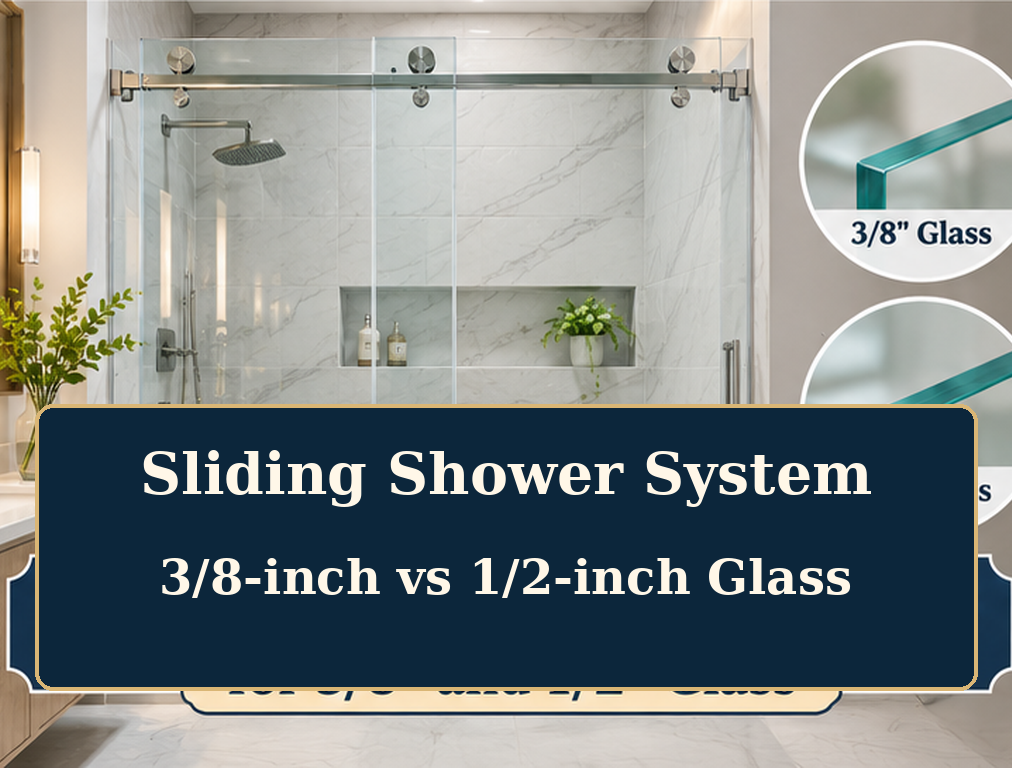
1/4-Inch vs 3/8-Inch vs 1/2-Inch Glass for Sliding Shower Doors
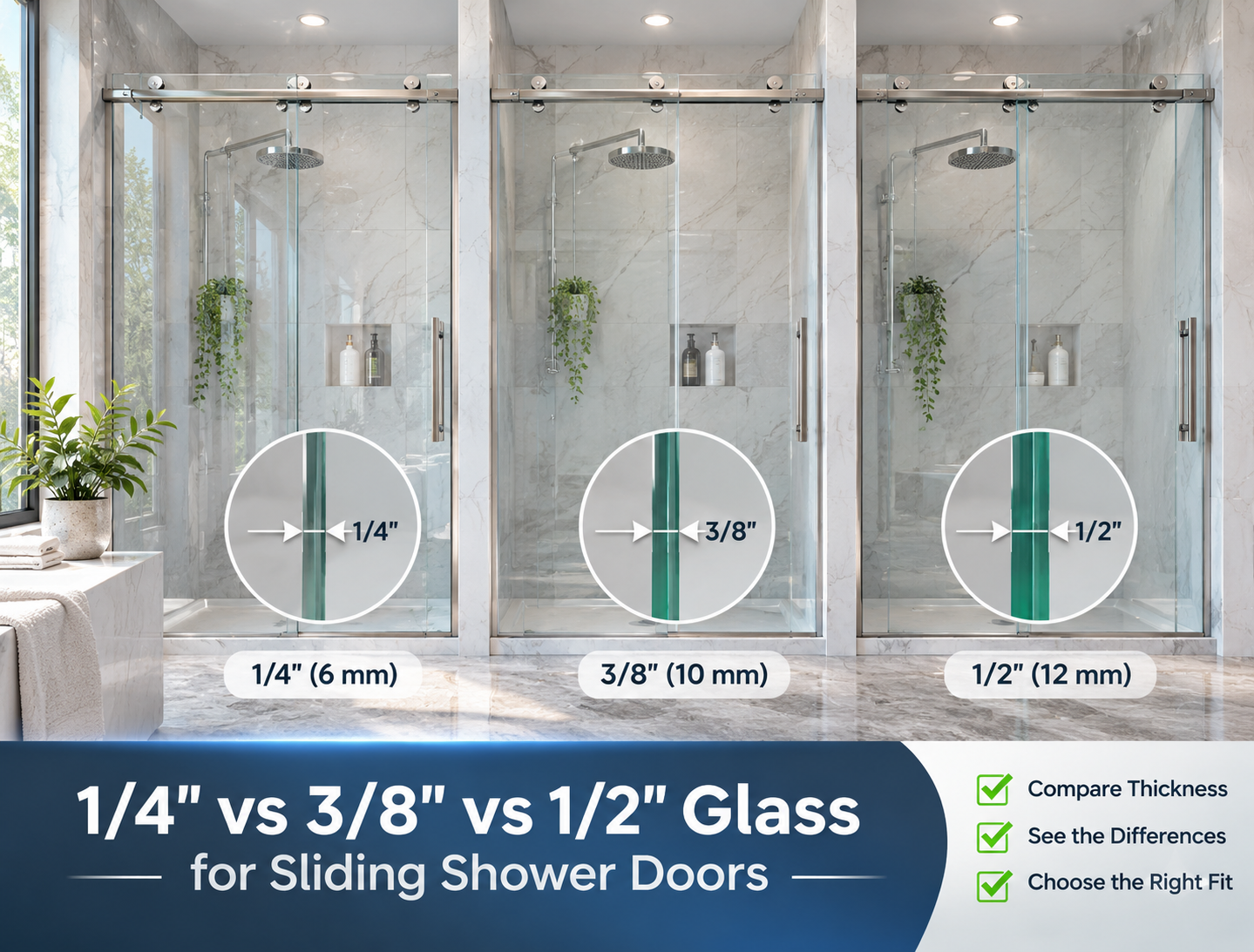


Choosing the correct sliding shower door glass thickness affects the enclosure’s appearance, weight, rigidity, hardware and installation requirements. The three common options are 1/4-inch, 3/8-inch and 1/2-inch glass, but they are not interchangeable within the same shower system. The hardware manufacturer must approve the selected thickness before the glass is measured and fabricated.
Thicker glass is not automatically the best choice for every bathroom. A properly engineered framed system may perform well with 1/4-inch glass, while a frameless slider may require 3/8-inch or 1/2-inch tempered glass. The complete enclosure should be evaluated as a system rather than judging the glass thickness by itself.
Sliding Shower Door Glass Thickness Comparison
Each thickness creates different requirements for rollers, tracks, guides and structural support. The following table provides a general comparison, but the specifications of the selected hardware kit should control the final decision.
| Glass thickness | Typical application | Main advantage | Main consideration |
|---|---|---|---|
| 1/4 inch | Framed or selected semi-frameless doors | Lower panel weight and economical construction | Usually relies more heavily on perimeter framing |
| 3/8 inch | Many frameless sliding systems | Good balance of rigidity, weight and frameless appearance | Requires hardware designed for heavy glass |
| 1/2 inch | Premium heavy-glass enclosures | Greater rigidity and substantial appearance | Adds significant weight and requires higher-capacity hardware |
1/4-Inch Sliding Shower Door Glass
One-quarter-inch glass is commonly associated with framed and some semi-frameless shower doors. The surrounding metal frame helps support the panel, control movement and reduce the amount of rigidity required from the glass itself. This can make the complete enclosure lighter and more economical than a heavy frameless system.
A 1/4-inch panel should not be installed in hardware designed only for 3/8-inch or 1/2-inch glass. Rollers, guides, seals and clamps may not grip the thinner panel correctly, even if the glass fits into the opening. Use 1/4-inch glass only when the complete door system specifically approves it.
3/8-Inch Sliding Shower Door Glass
Three-eighths-inch glass is widely used for residential frameless sliding enclosures. It provides more rigidity than 1/4-inch glass while keeping the moving-panel weight below that of a comparable 1/2-inch door. This balance makes it compatible with many contemporary single-slider and bypass systems.
The glass still requires hardware with an appropriate load rating and mounting design. Panel height and width affect the finished weight, so thickness alone cannot confirm compatibility. A tall or wide 3/8-inch panel may exceed the capacity of hardware that supports a smaller door made from the same glass.
1/2-Inch Sliding Shower Door Glass
One-half-inch glass provides increased rigidity and a substantial heavy-glass appearance. It may be selected for larger frameless panels or premium bathroom designs where minimal visual movement is preferred. The increased thickness can also make a large stationary panel feel more solid.
The additional weight affects handling, rollers, headers, guides and wall connections. A system designed only for 3/8-inch glass should never be upgraded to 1/2-inch glass without written manufacturer approval. The heavier panel may exceed the roller capacity even when its mounting holes appear similar.
Is Thicker Shower Glass Always Better?
Thicker glass can provide greater rigidity, but it also increases load on the hardware and supporting structure. A correctly engineered 3/8-inch system may be more suitable than an overloaded 1/2-inch installation. Safety depends on approved tempered glass, compatible components, correct fabrication and professional installation rather than thickness alone.
Appearance also influences the decision. One-half-inch glass has a heavier visual edge, while 3/8-inch glass often creates a similar frameless look with less moving weight. One-quarter-inch glass can remain a practical choice when a coordinated frame provides the necessary support.
Choose the Hardware Before Ordering Glass
The sliding hardware system determines the permitted glass thickness, mounting-hole preparation, panel size and maximum door weight. Glass should not be ordered first with the assumption that compatible hardware can be selected later. Daltex’s sliding kit guide explains why the rollers, track, guides and glass fabrication must be planned together.
The finished opening should also be measured after the tile, curb and wall surfaces are complete. Small differences in wall alignment can change the required glass deductions and overlap. The measurement guide provides a practical process for recording the opening before fabrication.
Clearwater for 3/8-Inch and 1/2-Inch Glass
The Clearwater sliding system provides flexibility because it is engineered for either 3/8-inch or 1/2-inch monolithic tempered glass. It combines one sliding panel with one fixed panel and allows a reversible configuration. The system supports a maximum sliding-door weight of 100 pounds and an opening width up to 79 inches.
Its round header and circular rollers create a coordinated frameless appearance, but the approved thickness must be selected before glass fabrication. The rollers require specific mounting holes, and the glass dimensions must keep the finished door within the system’s weight capacity. Daltex’s detailed Clearwater guide provides additional information about the product configuration and specifications.
Glass Thickness and Door Weight
Increasing glass thickness increases the weight carried by the sliding hardware. The panel’s height and width must therefore be included in the calculation. Two doors made from the same thickness can have significantly different finished weights when their dimensions are not equal.
The maximum door-weight rating should never be treated as a target that can be exceeded slightly. Handles, holes and fabrication may also affect the completed panel. An installer or glass fabricator should calculate the finished weight before releasing the glass order.
Tempered Glass and Fabrication Requirements
Sliding shower doors should use the safety glass specified by the manufacturer, which is commonly monolithic tempered glass for the systems discussed here. All roller holes, handle holes, notches and edge finishing must be completed before tempering. Finished tempered glass cannot be safely drilled, trimmed or reshaped.
This requirement makes early hardware selection especially important. If the glass is fabricated for one roller pattern, a different system may not fit the existing holes. Daltex’s shower hardware guide explains how mounting preparation and protective gaskets help connect hardware to glass safely.
Selecting Glass for a Dallas-Fort Worth Shower
For Dallas-Fort Worth projects, the correct thickness should be based on the enclosure dimensions, selected hardware and desired appearance. Three-eighths-inch glass is suitable for many frameless residential sliders, while 1/2-inch glass may be appropriate when an approved heavy-glass system and adequate structural support are available. One-quarter-inch glass remains practical for framed products designed around the thinner panel.
Daltex’s custom enclosure service can coordinate the opening measurement, glass thickness, fabrication and compatible hardware. Finalizing these details together reduces the risk of ordering glass that does not match the roller or guide system.
Final Takeaway
The best sliding shower door glass thickness is the one approved for the complete enclosure system. One-quarter-inch glass is commonly used with framed support, 3/8-inch glass balances rigidity and weight for many frameless sliders, and 1/2-inch glass creates a heavier premium enclosure when the hardware supports it. The Clearwater system is a useful option when a project requires a coordinated product that accepts either 3/8-inch or 1/2-inch tempered glass.
Frequently Asked Questions
1. What is the most common glass thickness for frameless sliding shower doors?
Many residential frameless sliding systems use 3/8-inch tempered glass because it balances rigidity and manageable panel weight. The exact thickness must still be approved by the selected hardware manufacturer.
2. Is 1/4-inch glass safe for a shower door?
One-quarter-inch tempered glass can be appropriate when used in a framed or semi-frameless system designed for that thickness. It should not be substituted into heavy frameless hardware that requires thicker glass.
3. Is 1/2-inch shower glass stronger than 3/8-inch glass?
One-half-inch glass is more rigid and heavier than a comparable 3/8-inch panel. The installed enclosure is safe only when the rollers, track, mounting surfaces and fabrication are approved for the additional weight.
4. Can Clearwater use both 3/8-inch and 1/2-inch glass?
The Clearwater system is designed for either 3/8-inch or 1/2-inch monolithic tempered glass. The chosen thickness must remain within the system’s panel-size, fabrication and 100-pound door-weight requirements.
5. Can I replace 3/8-inch shower glass with 1/2-inch glass?
The change should not be made unless the complete hardware system approves both thicknesses and the new panel remains within its weight limit. Guides, seals, gaskets and mounting preparation may also need to match the thicker glass.
6. When should shower glass thickness be selected?
Glass thickness should be selected after the finished opening and hardware requirements are known but before fabrication begins. This order allows the panel dimensions, mounting holes and weight to be coordinated with the selected system.