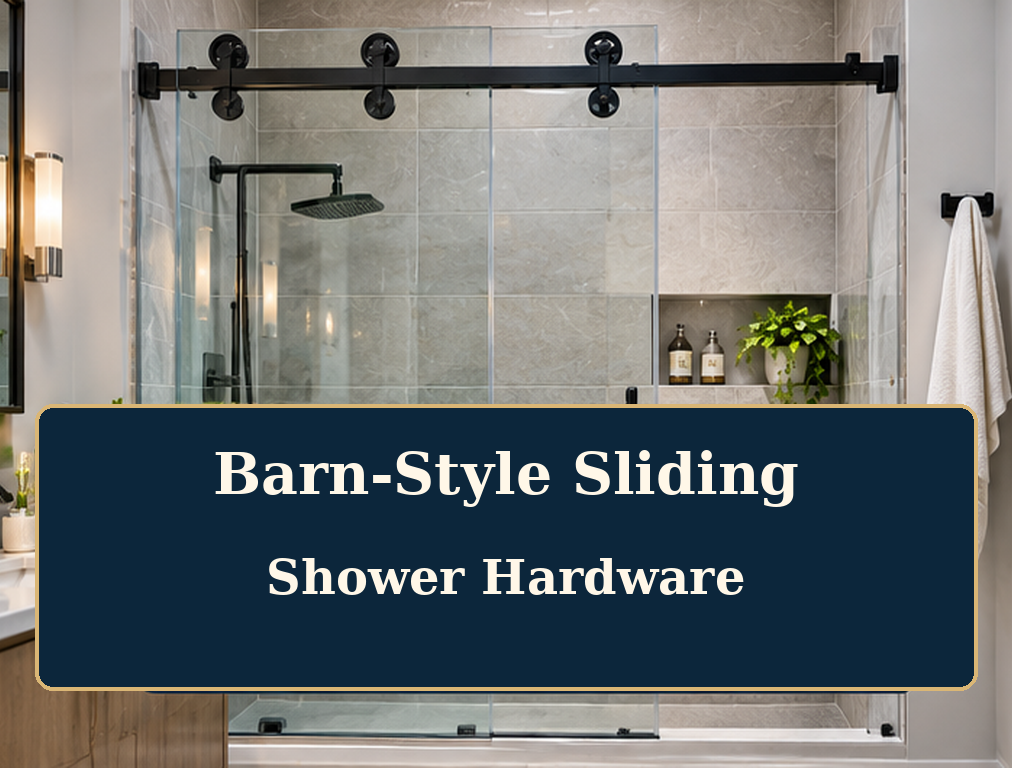
Clearwater Sliding Shower System for 3/8-Inch and 1/2-Inch Glass



The Clearwater sliding shower door system provides an unusual level of glass flexibility because it can be configured for either 3/8-inch or 1/2-inch tempered glass. It combines one sliding door with one stationary panel, using a reversible layout that allows the entrance side to suit the bathroom configuration. A round tubular header and circular rollers create a coordinated contemporary appearance while precision components support smooth and quiet movement.
Choosing between the two approved glass thicknesses requires more than selecting the heavier option for appearance. Panel dimensions, finished weight, mounting structure, fabrication requirements, handling conditions, and the overall design should all influence the decision. The complete system remains subject to a 100-pound maximum sliding-door weight regardless of the selected approved thickness.
Clearwater System Specifications
| Feature | Clearwater Specification |
|---|---|
| Glass thickness | 3/8 inch or 1/2 inch |
| Glass type | Monolithic tempered safety glass |
| Configuration | One sliding panel and one fixed panel |
| Panel orientation | Reversible |
| Maximum opening width | 79 inches |
| Maximum door weight | 100 pounds |
| Header style | 1-inch round tubular header |
| Roller style | Circular glass rollers |
| Roller-hole size | 5/8 inch |
| Corner option | 90-degree kit sold separately |
How the Clearwater System Works
The Clearwater system uses rollers attached to the moving glass panel and a round overhead header that establishes the travel path. The door slides alongside the fixed panel, while stops and a bottom guide control its movement. Because the sliding and fixed panels are reversible, the entrance can be positioned according to the showerhead, plumbing controls, vanity, toilet, and surrounding walls.
The standard header is suitable for openings up to 79 inches and can be field-cut according to the approved instructions. Cutting the header does not change the required panel overlap, glass proportions, weight capacity, or entrance clearance. Measurements and glass deductions must be calculated from the finished opening rather than from rough construction dimensions.
Choosing Between 3/8-Inch and 1/2-Inch Glass
Three-eighths-inch glass reduces the moving-panel weight and is commonly used for residential frameless sliding systems. It can make handling and installation more manageable while still creating a substantial frameless appearance. The finished door must remain rigid enough for its dimensions and within the complete Clearwater system limits.
Half-inch glass provides greater rigidity and a heavier visual presence, which may suit larger or premium enclosures. The additional weight affects handling, installation labor, and structural loading, even though Clearwater is approved for this thickness. Panel dimensions must be calculated carefully because a large 1/2-inch panel can approach the 100-pound door limit more quickly.
Glass thickness should be selected in coordination with the actual panel size and approved fabrication drawing. It should not be changed after the hardware or glass has been ordered. Daltex’s sliding kit guide explains the relationship between glass thickness, weight, opening width, and hardware capacity.
Glass Fabrication Requirements
Each Clearwater roller requires a 5/8-inch diameter hole in the moving panel. The fixed-panel standoff fittings also require approved 5/8-inch holes when those fittings are used. Handle or finger-pull preparation must be added according to the selected accessory.
All fabrication must be completed before tempering because finished tempered glass cannot be drilled or recut. The installer should verify the panel orientation, hole locations, fixed-panel position, and finished dimensions before the order is released. Using fabrication details from another sliding series can create incompatible holes or clearances.
Header and Roller Design
The circular rollers and one-inch tubular header give Clearwater a softer appearance than systems using rectangular headers or square carriers. This profile coordinates naturally with round showerheads, tubular pulls, curved faucets, and other circular bathroom fixtures. Available finishes include Brushed Bronze, Brushed Stainless, Matte Black, Polished Stainless, and Satin Brass.
Finish selection should follow the technical system choice rather than lead it. Hardware described with similar color names may still differ in sheen or tone when sourced from unrelated collections. Coordinating the header, rollers, pull, brackets, guides, and stops within the same finish family produces a more consistent result.
What Additional Components May Be Required?
The Clearwater hardware system contains the main sliding components, but the fixed-panel bottom support and door pull may require separate selection. U-channels or clamps should match the glass thickness, panel dimensions, substrate, and desired appearance. Seals, sweeps, and water-control components should also match the final gaps and direction of movement.
Before ordering, confirm every component included with the exact kit and list all separately purchased hardware. The full hardware guide can help identify the hinges, clamps, guides, seals, handles, and fasteners used across different enclosure styles. This review helps prevent delays caused by missing installation-specific parts.
Can Clearwater Be Used for a Corner Shower?
The standard Clearwater system is designed for a 180-degree inline configuration. A compatible 90-degree accessory kit is available separately for certain enclosures with a return panel. The return glass, adapter, header, fixed panel, and curb must be planned together before fabrication.
A corner installation introduces additional alignment and structural requirements. The return panel may contribute to the support of the hardware, so its dimensions and mounting method cannot be treated as decorative details. Professional planning is advisable when the enclosure includes multiple glass panels or walls that are not square.
Installation Considerations
The header must be mounted level and connected to appropriate structural support. The rollers, fixed-panel fittings, bottom guide, and stops must remain aligned so the door travels smoothly without lifting, binding, or contacting the stationary glass. Final testing should cover the complete travel path and confirm consistent overlap and clearance.
Large 3/8-inch and 1/2-inch panels require suitable lifting equipment and professional installation tools. The glass edges must remain protected from tile, metal, and hard surfaces throughout the work. Manufacturer instructions should control the header cutting, glass deductions, hole locations, fasteners, and adjustment sequence.
Is Clearwater Right for Your Shower?
Clearwater is a strong option when the project requires a reversible single-slider configuration, round architectural hardware, and a choice between 3/8-inch and 1/2-inch glass. Its 79-inch maximum opening and 100-pound door capacity make it suitable for a range of custom residential enclosures. The option to add a 90-degree kit also gives designers flexibility for selected return-panel layouts.
The system may not be the right choice when two bypass doors, soft-stop operation, or a completely header-free appearance is required. These needs may be better served by another sliding shower collection. Daltex’s custom enclosures service can coordinate the glass thickness, panel dimensions, hardware, finish, seals, and structural requirements.
Frequently Asked Questions
Can Clearwater use both 3/8-inch and 1/2-inch glass?
The Clearwater system is designed for either 3/8-inch or 1/2-inch tempered glass. The selected thickness must be reflected in the panel dimensions, weight calculation, guides, seals, and related hardware. The choice should be finalized before fabrication begins.
What is the maximum Clearwater door weight?
The maximum recommended sliding-door weight is 100 pounds. This limit applies to the finished moving panel and should not be estimated from glass thickness alone. Actual width, height, cutouts, and glass density affect the final weight.
How wide can a Clearwater enclosure be?
The system supports an opening up to 79 inches, with the header field-cut for approved smaller openings. Minimum panel dimensions and overlap still determine whether a specific opening is suitable. Follow the current installation instructions for deductions.
Does Clearwater require holes in the glass?
Each roller requires a 5/8-inch hole, and fixed-panel fittings may require additional 5/8-inch holes. Handle or finger-pull preparation depends on the selected accessory. Every opening must be fabricated before tempering.
Is the Clearwater panel direction reversible?
The sliding and fixed panels can be reversed to place the entrance on the preferred side. Orientation should account for bathroom fixtures, showerhead direction, plumbing controls, and water management. It must be confirmed before the glass order is approved.
Can Clearwater be used with laminated glass?
The system documentation specifies monolithic tempered safety glass. Laminated glass should not be substituted without explicit written manufacturer approval. Different glass constructions can change thickness, edge behavior, weight, and hardware compatibility.