Soft-Close Sliding Shower Doors: Are They Worth the Upgrade?



A soft close sliding shower door uses a controlled stopping mechanism to slow the moving glass panel as it approaches the end of the track. Instead of allowing the door to strike the stopper abruptly, the system reduces the final speed and guides the panel into its resting position. This creates quieter operation and can reduce repeated impact on rollers, stops, wall connections, handles, and other shower-door hardware.
Soft-close and soft-stop are often used to describe similar controlled-motion features, although the exact operation depends on the manufacturer and system. Some mechanisms control only the closing direction, while coordinated systems may provide controlled movement near both ends of the track. Compatibility must therefore be verified from the product number and installation instructions rather than from the soft-close description alone.
How Soft-Close Shower Door Hardware Works
A soft-close mechanism normally uses a trigger and damping component positioned inside or beside the sliding track. As the door approaches the end of its travel, the trigger engages the damper, which absorbs part of the movement and controls the panel through the final section. The system must be positioned accurately because a trigger installed too early can reduce the usable entrance, while one installed too late may not engage before the door reaches the stopper.
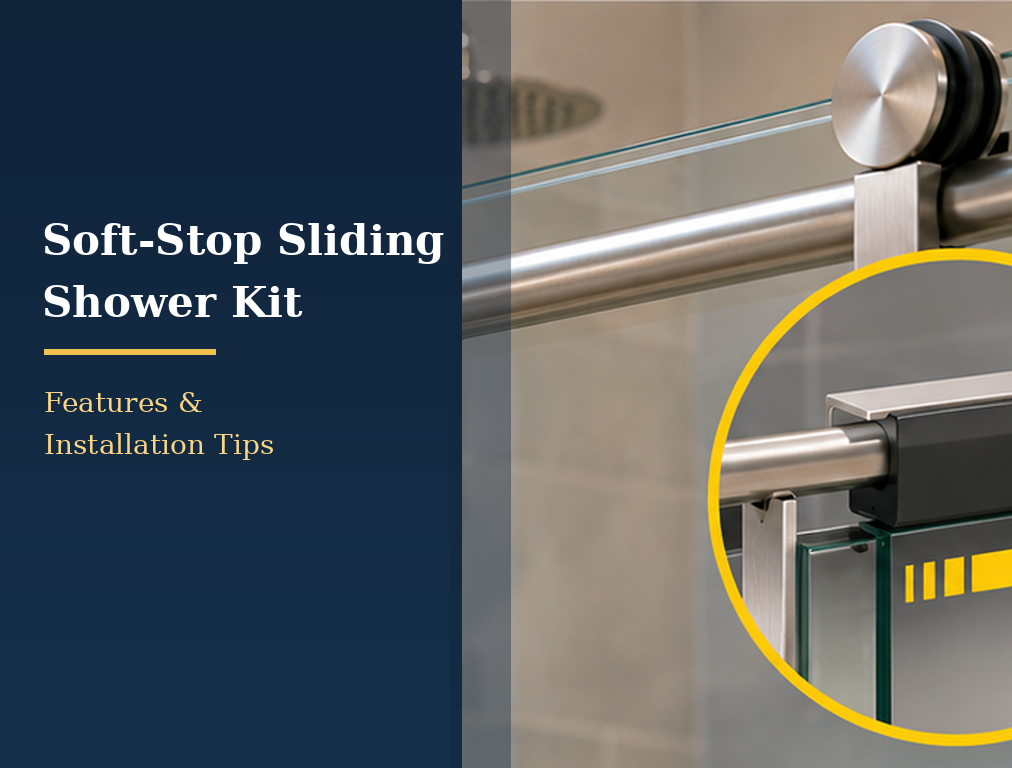
The soft-stop kit offered by Daltex is identified as item TW180SSK and is designed for compatible TideWater sliding hardware. It includes adjustable soft-stop triggers that must be coordinated with the correct track and carrier arrangement. It should not be treated as a universal accessory for every barn-style, bypass, or frameless sliding shower door.
Standard Sliding Door vs Soft-Close Door
| Consideration | Standard Sliding Door | Soft-Close Sliding Door |
|---|---|---|
| Final movement | Controlled by the user and mechanical stop | Slowed by a damping mechanism |
| Closing noise | Depends heavily on user operation | Generally quieter near the stop |
| Hardware impact | Can be higher when closed quickly | Reduced when properly adjusted |
| Installation | Fewer motion-control components | Requires triggers and adjustment |
| Compatibility | Based on the original roller system | Must match the soft-close system |
| Maintenance | Rollers, guides, stops, and seals | Same components plus soft-stop parts |
Benefits of a Soft-Close Sliding Shower Door
The most noticeable benefit is quieter operation. A heavy glass panel can produce a sharp sound when it reaches a conventional stopper quickly, especially in a bathroom surrounded by tile and other hard surfaces. A properly adjusted soft-stop mechanism reduces the speed near the end of travel and creates a more controlled user experience.
Controlled movement may also reduce repeated shock across the system. The rollers, track, stops, handles, glass connections, and wall attachments still carry their normal loads, but the panel is less likely to strike the end hardware with full momentum. This benefit depends on correct installation because a misaligned door or improperly positioned trigger can create new resistance instead of smoother movement.
Soft-close hardware can be particularly useful in frequently used bathrooms, shared homes, rental properties, and guest bathrooms where different users may operate the door with varying amounts of force. It can also add a more refined feel to a custom frameless enclosure. The upgrade does not make the glass unbreakable or remove the need for careful operation, but it can make everyday movement more predictable.
When Is the Upgrade Worth It?
A soft-close sliding shower door is usually worth considering when the enclosure is used several times each day, the moving panel is relatively heavy, or noise reduction is a priority. It may also make sense when a new enclosure is already being designed around a compatible soft-stop system, since the track, carriers, panel dimensions, and triggers can be coordinated before installation. Planning the feature from the beginning is normally more straightforward than attempting to add unrelated components later.
The upgrade may offer less value when the shower is used infrequently or when the existing door already moves quietly and stops without impact. It may also be impractical when the current track, roller carriers, or header cannot accept the required triggers. Daltex’s guide to choosing a sliding hardware kit can help determine whether a complete compatible system is more appropriate than a separate upgrade.
Can Soft-Close Hardware Be Added to an Existing Door?
Retrofitting is possible only when the existing sliding system is designed for the specific soft-stop components being considered. Track dimensions, carrier design, door width, available travel, trigger position, glass thickness, and panel weight can all affect compatibility. A kit that physically fits inside the header may still interfere with the rollers or reduce the required entrance clearance.
The existing door should move smoothly before any soft-close component is added. A damper will not correct damaged rollers, a bent track, loose wall brackets, an incorrect bottom guide, or a panel that rubs against the fixed glass. These problems should be repaired first because additional resistance can prevent reliable trigger engagement.
For a TideWater installation, the product number and current instructions should be checked before ordering TW180SSK. The complete TideWater system includes coordinated components for 3/8-inch tempered glass. Mixing parts from another sliding series should be avoided unless the manufacturer confirms compatibility.
Installation and Adjustment
Soft-close installation requires more than attaching a damper near the end of the track. The installer must establish the correct trigger location, maintain sufficient panel travel, verify the door’s minimum width, and confirm that the carriers remain aligned. The mechanism should engage smoothly without pulling the door sideways or causing it to stop before the entrance is fully closed.
After installation, the door should be tested repeatedly from normal operating speeds. The mechanism should slow the panel consistently without a sudden catch, rebound, scraping sound, or impact against the final stopper. Professional installation tools and the correct system instructions are important because adjustment errors can affect the usable opening and movement of heavy tempered glass.
Maintenance Requirements
A soft-close mechanism does not normally require complicated maintenance, but the complete door system should remain clean and aligned. Soap residue, mineral buildup, and debris around the guide or track can increase resistance and change the way the triggers engage. Cleaning should follow the hardware manufacturer’s instructions, using nonabrasive products that will not damage the finish or internal components.
If the door begins closing too quickly, stopping too early, or failing to engage, inspect the rollers, track, guide, stoppers, and soft-stop triggers together. Do not apply random lubricant to the damper because some lubricants can attract debris or damage internal materials. Loose or damaged components should be addressed before normal use continues.
Soft-Close Hardware and the Complete Enclosure
The soft-close feature is only one part of a reliable sliding shower enclosure. Glass thickness, panel weight, track capacity, wall support, roller alignment, bottom guide position, seals, and entrance clearance remain equally important. Daltex’s hardware guide explains how these components work together to support safe and consistent door operation.
For a new project, the soft-close mechanism should be selected before the glass is ordered. This allows the panel dimensions, hardware, opening width, and track layout to be coordinated as a complete system. Daltex’s custom enclosures service can help plan the glass and compatible sliding hardware around the finished bathroom opening.
Final Verdict
A soft close sliding shower door can be a worthwhile upgrade when quieter movement, controlled stopping, and a more refined operating feel are important. The greatest value is usually achieved when the feature is included in a new compatible system or added to an existing system specifically designed to accept it. The upgrade should not be expected to repair worn rollers, incorrect glass dimensions, or poor alignment.
Before ordering a separate soft-stop kit, confirm the exact sliding series, product number, door dimensions, available travel, and current hardware condition. A system-specific component such as TW180SSK should be installed only with approved compatible hardware. Correct selection and adjustment are what turn the feature from an extra accessory into a useful long-term improvement.
Frequently Asked Questions
What is a soft-close sliding shower door?
A soft-close sliding shower door uses a damping mechanism to slow the glass near the end of its travel. This helps the panel reach the closed position with less abrupt impact. The exact movement depends on the hardware system and trigger adjustment.
Are soft-close and soft-stop the same?
The terms are often used for similar controlled-motion features, but manufacturers may define them differently. Some systems control only closing, while others provide controlled movement at both ends. Always review the specifications for the exact product.
Can a soft-close kit fit any sliding shower door?
Soft-close kits are not universal because tracks, carriers, triggers, panel widths, and weight limits vary. The product must be approved for the existing sliding series. Visual similarity does not confirm compatibility.
Does soft-close hardware prevent glass breakage?
Soft-close hardware can reduce abrupt impact when the system is functioning correctly. It cannot protect glass from edge damage, incorrect installation, excessive force, or incompatible hardware. Tempered glass still requires careful handling and proper support.
Can soft-close hardware fix a door that drags?
A soft-close kit will not repair worn rollers, a damaged guide, a bent track, or misaligned glass. The door should move smoothly before the damping mechanism is installed. Existing movement problems should be diagnosed separately.
Does a soft-close shower door require maintenance?
The track, rollers, guides, stops, and triggers should be kept clean and periodically inspected. Adjustment may be required if the mechanism begins engaging too early or too late. Cleaning and maintenance should follow the manufacturer’s instructions.