

Ridgeline Bottom-Rolling Shower Door: Round vs Square Rollers
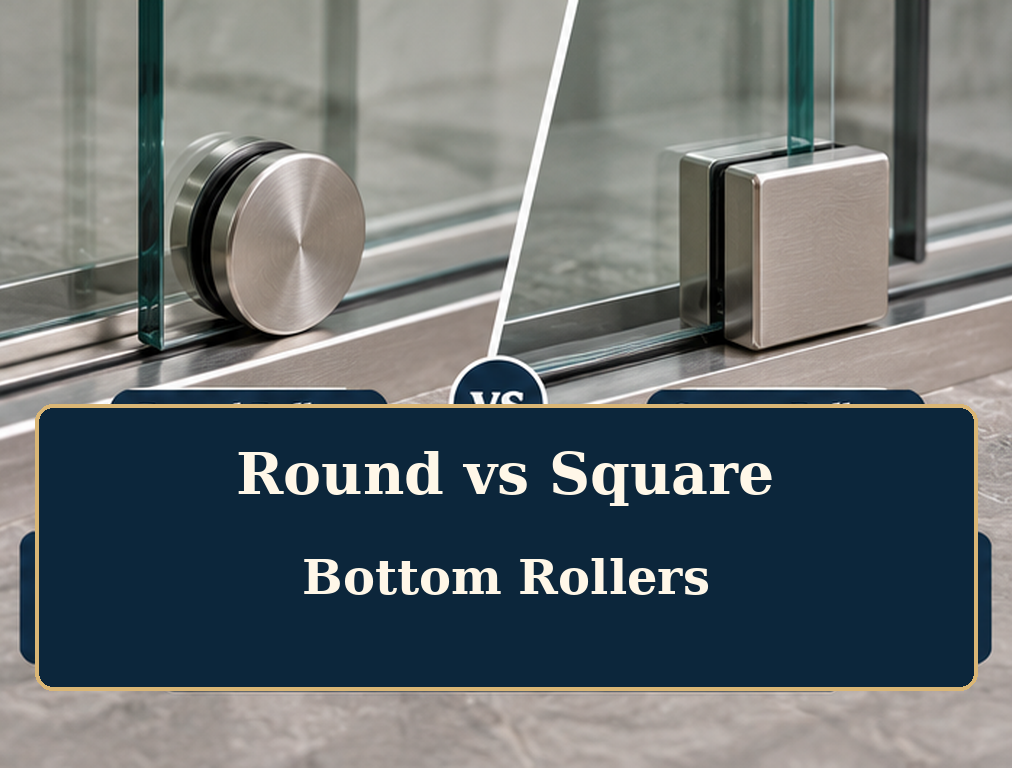


A bottom rolling shower door carries the moving panel on rollers positioned near the curb instead of suspending its full weight from an overhead header. The Ridgeline system uses this configuration to support heavy 1/2-inch tempered glass while creating a more open header-free appearance. Its top guide controls the upper portion of the panel, but the bottom track and roller assemblies carry the primary moving load.
Ridgeline is available with round or square roller housings, allowing the visible hardware to coordinate with different bathroom styles. The roller shape changes the design language rather than the essential system capacity, since both versions use the same glass thickness, opening limits, panel arrangement, and bottom-rolling principle. Selection should therefore begin with technical compatibility and then move to the preferred hardware profile.
Ridgeline System Specifications
| Feature | Ridgeline Specification |
|---|---|
| Glass type | 1/2-inch tempered glass |
| Configuration | One sliding panel and one fixed panel |
| Door position | Sliding panel remains inside the shower |
| Maximum opening width | 65 inches |
| Maximum panel size | Up to 36 inches wide by 84 inches tall |
| Maximum slider weight | 136 pounds |
| Height adjustment | 3/16 inch |
| Header | No full overhead header required |
| Roller options | Round or square |
| Fixed-panel hardware | Selected components sold separately |
How a Bottom-Rolling Shower Door Works
The Ridgeline door travels on heavy-duty rollers connected to a bottom track, transferring most of the moving load to the curb area. An integrated guide keeps the door engaged with the track and helps prevent excessive lateral movement or lifting. This approach allows the enclosure to avoid the continuous overhead header found on many top-hung sliding systems.
The bottom track includes water-management features intended to direct water back toward the shower interior. Correct curb slope and track installation remain important because the hardware cannot compensate for a curb that directs water toward the bathroom. The moving panel must remain on the shower side of the fixed glass so the overlap and drainage system function as designed.
Round vs Square Ridgeline Rollers
The round Ridgeline kit uses circular roller housings that complement rounded faucets, tubular handles, curved showerheads, and softer bathroom design elements. The rounded profile can make the exposed hardware feel less visually heavy, particularly when polished chrome or brushed nickel is selected. It is often a natural match for bathrooms dominated by circular fixtures.
The square Ridgeline kit uses angular housings that coordinate with square handles, rectangular showerheads, sharp tile lines, and contemporary cabinetry. Its geometric shape creates a more structured appearance without changing the fundamental movement of the door. Matte black and satin brass can further emphasize the modern profile.
Both roller styles are designed for the same Ridgeline operating system. Round rollers are not inherently smoother, and square rollers are not automatically stronger, because the core specifications remain substantially the same. The decision should be based on compatibility with the selected kit and the visual language of the bathroom.
Why Ridgeline Uses 1/2-Inch Glass
Half-inch tempered glass provides greater rigidity and a substantial appearance for large frameless panels. Because it is heavier than 3/8-inch glass, the supporting hardware, track, guides, and mounting surfaces must be designed for the increased load. Ridgeline’s bottom rollers are engineered for panels up to 36 inches wide, 84 inches tall, and 136 pounds.
The system should use monolithic tempered safety glass prepared from the current fabrication template. Each roller requires an edge notch, while the top guide requires two slot cuts in the moving panel. These details cannot be created after tempering, making approved fabrication drawings essential.
Header-Free Appearance
Removing a continuous top header can make the shower feel more open and place greater visual emphasis on the glass. The Ridgeline still requires a top guide, but it does not use a full load-bearing header across the enclosure. This distinction is useful for homeowners who want the convenience of a sliding door without a prominent top rail.
A header-free appearance does not mean the enclosure is unsupported. The fixed panel, wall connections, U-channel, bottom track, guide, and door bumpers must all be installed correctly. Daltex’s complete hardware guide explains how these supporting components contribute to alignment and safety.
What Is Included With the Kit?
A Ridgeline kit includes a top guide, two round or square rollers, the bottom track, a fixed-panel U-channel, an L-shaped jamb seal, and door bumpers. The primary mounting hardware and installation instructions are also provided. Wall-mounted glass brackets and the door pull must be selected separately.
The chosen wall bracket should match the round or square roller style to maintain a coordinated appearance. Handle dimensions must also match the fabricated holes in the glass and provide adequate clearance throughout the door’s travel. All included and excluded components should be confirmed before releasing the glass order.
Adjustment and Curb Conditions
Ridgeline provides 3/16-inch total height adjustment, which can assist with final alignment. The bottom rollers are designed to accommodate limited curb-pitch variation, but they cannot correct a severely uneven base or inaccurate glass dimensions. The curb must remain structurally suitable, properly waterproofed, and configured to direct water inward.
Measurements should be taken after the finished surfaces are complete. The opening width, curb level, wall plumb, fixed-panel position, and moving-panel overlap must all be checked before fabrication. Daltex’s sliding kit guide provides a broader checklist for comparing glass, opening, and hardware requirements.
Installation Considerations
Installation requires accurate positioning of the bottom track because it establishes the movement path and carries the door load. The top guide must remain aligned with the lower rollers, while the fixed panel must be secured without placing unintended pressure on its edges. The system should be tested across its full travel before sealing and final adjustment.
Heavy 1/2-inch glass requires rated lifting equipment and trained handling. Suitable installation tools help protect the glass, finished tile, and hardware during alignment. Professional installation is advisable when waterproofing details, curb support, glass fabrication, or wall attachment conditions are uncertain.
Which Roller Style Should You Choose?
Choose round rollers when the bathroom uses curved fixtures, tubular handles, and softer decorative lines. Choose square rollers when the design uses rectangular fixtures, angular hardware, and strong geometric details. Neither shape should be chosen until the exact Ridgeline configuration and available finish have been confirmed.
For a coordinated custom installation, Daltex’s shower enclosure service can match the roller style, glass preparation, handle, fixed-panel bracket, U-channel, and finish. Planning these components together helps avoid mismatched profiles and incompatible fabrication. The final selection should balance appearance with the opening’s technical requirements.
Frequently Asked Questions
What is a bottom rolling shower door?
A bottom rolling shower door carries the moving glass panel on rollers positioned at the lower track. A top guide controls alignment but does not carry the full door weight like a conventional overhead header. This arrangement can support heavy glass while maintaining a more open appearance.
Do round and square rollers perform differently?
The Ridgeline round and square roller options share the same core system specifications. Their primary difference is visual shape rather than basic capacity or glass requirement. Select the profile that matches the bathroom fixtures and accompanying brackets.
What glass thickness does Ridgeline require?
Ridgeline is designed for 1/2-inch, or 12 mm, tempered glass. The system should not be installed with a different thickness unless the manufacturer provides written approval. Glass weight and fabrication must remain within the published limits.
Does Ridgeline require glass fabrication?
The moving panel requires edge notches for the rollers and slot cuts for the top guide. These details must be completed before the glass is tempered. The current fabrication template should be used for every order.
Does a Ridgeline system need a top header?
Ridgeline does not require a continuous overhead header for installation. It still uses a top guide to control the moving panel and maintain alignment. The bottom track and rollers carry the primary load.
Are the handle and wall brackets included?
Wall-mounted glass brackets and the door pull are sold separately from the main kit. They should match the selected round or square hardware profile and approved glass preparation. Confirm their dimensions and finish before ordering the glass.


