

How to Fix a Sliding Shower Door That Comes Off the Track
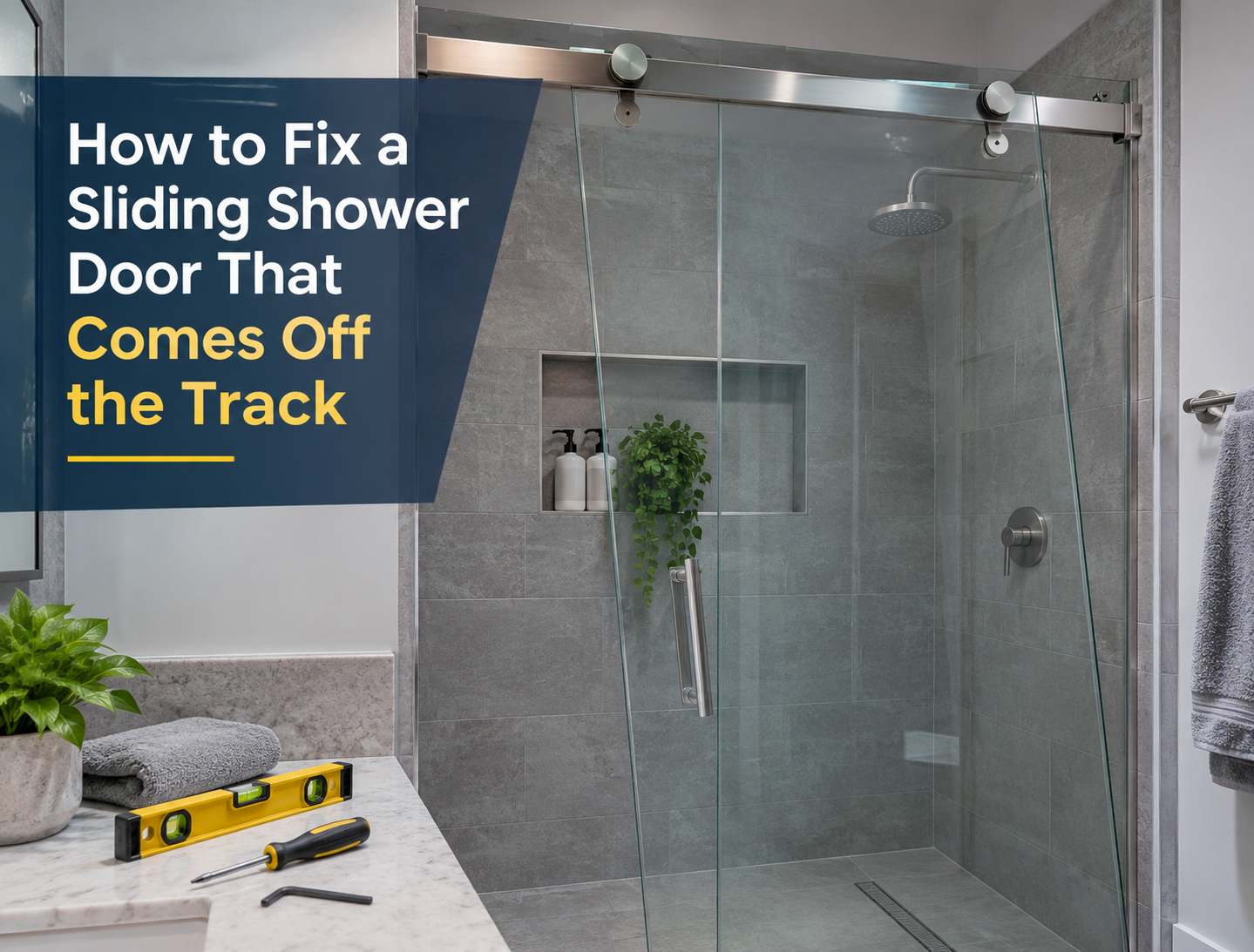


A sliding shower door should move smoothly, remain properly aligned and stop securely at each end of its travel. When a sliding shower door comes off the track, continuing to operate it can place uneven pressure on the tempered glass, rollers, bottom guide and surrounding hardware. The problem may begin with something as simple as residue in the track, but repeated derailment usually indicates a worn, loose or incorrectly adjusted component that needs closer inspection.
The phrase “off the track” can describe several different problems. A framed bypass door may have a wheel that has left its upper rail, while a frameless top-hung door may still be resting on its rollers but no longer be controlled by the bottom guide. Identifying which component has lost alignment is the first step toward making a safe and lasting repair.
Stop Using the Door Until You Find the Cause
Do not force the door closed, lift it by the handle or repeatedly push it back into position. A heavy tempered-glass panel can move suddenly when a roller, guide or anti-jump component is no longer controlling it. Keep people away from the enclosure, place a folded towel or protective mat near the curb and support the panel only if you can do so without placing your hands beneath an exposed glass edge.
If the panel is visibly leaning, touching tile, rubbing another glass panel or hanging from only one roller, the safest decision is to stop and contact an experienced glass installer. A professional can support the panel with suitable lifting equipment while inspecting the complete roller and track system. Daltex’s guide to replacement parts explains the measurements and hardware details that should be recorded before ordering a component.
Why Does a Sliding Shower Door Come Off the Track?
A sliding shower door can lose alignment when the rollers wear unevenly, mounting hardware loosens, the lower guide moves or the track becomes obstructed. Missing stops and anti-jump devices can also allow the door to travel or lift farther than the system was designed to permit. Because these parts work together, putting the panel back on the rail without correcting the original cause may only produce another derailment.
| Door symptom | Likely cause | Recommended action |
|---|---|---|
| Door drags at one end | Roller height or track alignment problem | Check roller adjustment and track level |
| Bottom of glass swings sideways | Loose, worn or damaged bottom guide | Secure or replace the correct guide |
| Door makes a grinding sound | Damaged bearing, wheel or contaminated track | Clean the track and inspect the roller |
| Door repeatedly leaves the rail | Worn roller, missing anti-jump part or incorrect stop | Stop using the door and inspect the complete system |
| Glass touches tile or metal | Serious alignment or hardware problem | Arrange professional service before further use |
The rollers, track, bottom guide, stops and anti-jump devices should be treated as a coordinated assembly. The Daltex hardware guide provides a practical explanation of how these components control the movement and position of a sliding glass panel.
Step 1: Clean and Inspect the Track
Soap residue, hair, mineral deposits and small pieces of debris can prevent a roller from traveling correctly. Clean accessible track surfaces with a soft cloth and a nonabrasive cleaner that is suitable for the hardware finish. Avoid steel wool, aggressive chemicals and sharp tools because they can scratch the track, damage a protective finish or affect nearby gaskets.
After cleaning, inspect the full travel path with the door stationary. Look for dents, raised fasteners, damaged stops, bent track sections and areas where the wheel does not sit evenly. If the track is physically damaged, cleaning alone will not return the system to safe operation.
Step 2: Check the Rollers and Mounting Hardware
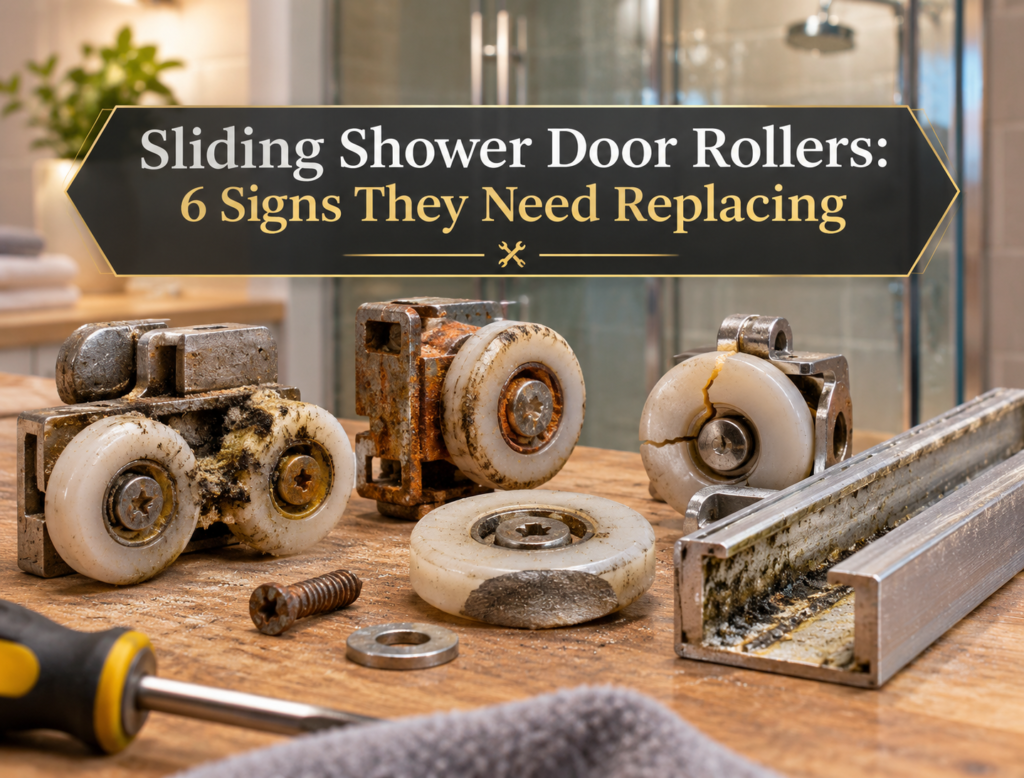
Examine each roller for cracking, flat spots, visible corrosion, side-to-side movement and uneven contact with the track. The wheel should rotate smoothly without grinding, binding or wobbling. Decorative caps can hide the mounting connection, so do not remove them unless you have the correct manufacturer instructions and the glass panel is safely supported.
Loose hardware should never be tightened aggressively against glass. Shower door roller assemblies normally use protective gaskets or sleeves to prevent direct metal-to-glass contact, and overtightening can damage these materials or concentrate stress around a mounting hole. If a roller is visibly damaged or no longer holds its adjustment, replacement is usually more reliable than repeated realignment.
Step 3: Inspect the Bottom Guide, Stops and Anti-Jump Parts
The bottom guide keeps the moving panel from swinging inward or outward while the upper rollers carry the load. If the guide is loose, incorrectly positioned or worn, the door may appear to be off track even when both rollers remain on the upper rail. Confirm that the glass passes through the guide without binding and that the guide does not allow excessive sideways movement.
Stops determine where the door ends its travel, while anti-jump parts help prevent the panel from lifting away from the track. These components should not be removed to gain additional door movement. If either part is missing or damaged, replace it with a component approved for the original shower system before returning the door to normal use.
Step 4: Reset the Door Only When the Hardware Is Sound
Some lighter framed doors can be lifted and reseated according to the manufacturer’s instructions, but a frameless heavy-glass door should not be handled by one person. If panel removal is required, use two trained people, proper glass-handling equipment and the installation manual for that specific system. Never rest an exposed tempered-glass edge directly on tile, concrete or metal.
Once the panel is correctly positioned, check its alignment through the complete opening and closing cycle. The door should maintain consistent clearance, pass smoothly through the guide and contact the stops without a hard impact. If it begins to tilt, grind or lift again, stop the test because the underlying hardware problem has not been corrected.
When a Denali Roller Should Be Replaced
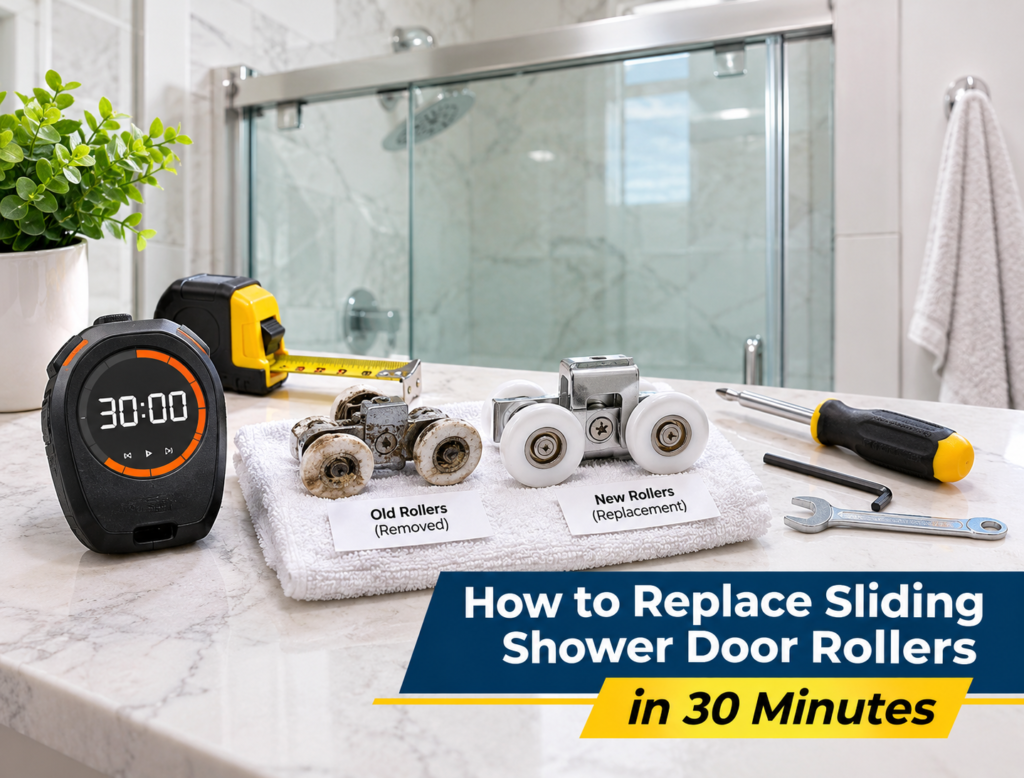
If the enclosure uses a Denali sliding system and inspection confirms a damaged roller, the Denali door roller is the system-specific replacement component to consider. It is designed for the Denali Series and 3/8-inch glass, is sold individually and is available in multiple finishes. Compatibility should still be verified by checking the original system, glass preparation, finish and condition of the second roller.
A replacement should not be selected only because its wheel diameter looks similar. Mounting-hole size, axle design, offset, track profile and glass thickness all affect whether a roller will operate safely. Daltex’s sliding kit guide provides additional guidance for matching rollers, tracks, guides and glass requirements.
When to Call a Glass Professional
Professional service is recommended when the panel is heavy, the glass is chipped, the door hangs from one roller, the track is damaged or the exact hardware cannot be identified. It is also the better option when the repair requires removal and reinstallation of a frameless panel. Tempered glass cannot be drilled, cut or reshaped after manufacturing, so incompatible mounting holes may require replacement glass rather than a modified roller installation.
Dallas-Fort Worth homeowners and contractors can contact Daltex for glass replacement support when the problem involves damaged glass, unavailable hardware or a complete enclosure assessment. A proper repair should correct the reason the door left its track, not merely place the panel back in its previous position.
Final Takeaway
When a sliding shower door is off track, begin by stopping its use and determining whether the problem involves the upper rollers, track, lower guide, stops or anti-jump hardware. Cleaning may solve minor movement problems, but repeated derailment, visible roller damage and unstable glass require replacement parts or professional service. Matching the repair to the original shower system protects the glass and helps restore smooth, controlled door movement.
Frequently Asked Questions
1. Why does my sliding shower door keep coming off the track?
Repeated derailment usually points to worn rollers, a loose bottom guide, damaged stops, a misaligned track or missing anti-jump hardware. Simply putting the door back on the rail will not provide a lasting fix unless the failed component is corrected.
2. Can I put a frameless shower door back on the track myself?
A frameless panel may be too heavy and unstable for safe one-person handling. If the repair requires lifting or removing the glass, use an experienced installer with proper glass-handling equipment.
3. Can dirty tracks make a shower door come off?
Heavy residue can prevent smooth roller movement and contribute to binding or uneven travel. Cleaning helps when contamination is the main problem, but it will not repair cracked wheels, loose guides or damaged tracks.
4. Are sliding shower door rollers universal?
No, shower door rollers are not universal. The replacement must match the track profile, glass thickness, mounting hole, offset, weight requirements and safety components of the original system.
5. Can tempered shower glass be drilled for a new roller?
Tempered glass must not be drilled, cut or notched after the tempering process. If the existing holes do not match the replacement hardware, correctly fabricated replacement glass may be required.
6. How do I know whether the roller or track is damaged?
A damaged roller may wobble, grind, bind or show visible wheel wear, while a damaged track may have dents, deformation or an uneven running surface. Both components should be inspected because a damaged track can quickly wear a new roller.


One thought on “How to Fix a Sliding Shower Door That Comes Off the Track”