

Top-Rolling vs Bottom-Rolling Shower Doors: Which Lasts Longer?
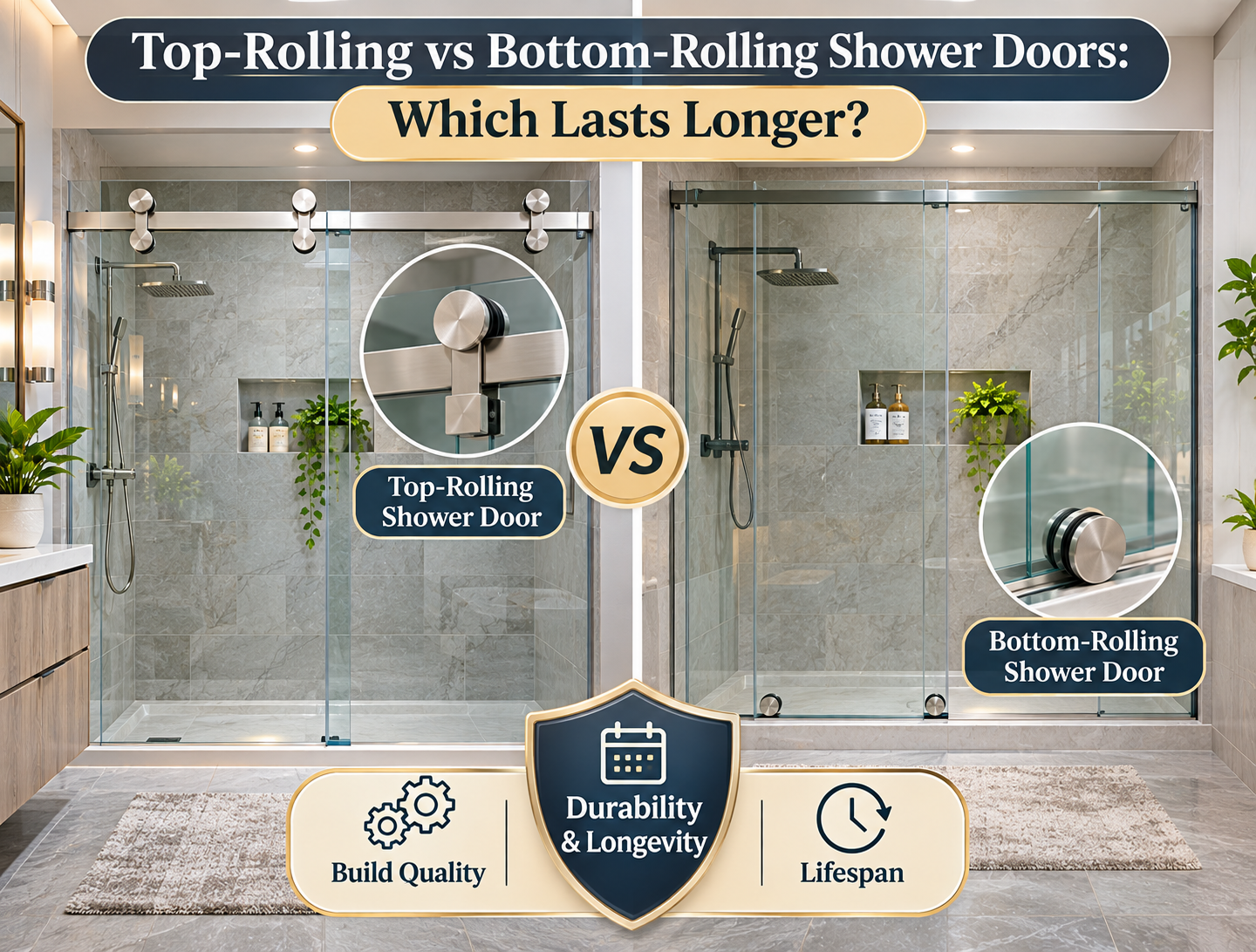


When choosing a sliding shower door, the position of the rollers can have a major influence on the enclosure’s design, maintenance requirements, and long-term performance. Both top-rolling and bottom-rolling systems allow glass panels to move horizontally, but they distribute the door’s weight differently and rely on different supporting components.
A top-rolling shower door suspends the moving glass panel from rollers that travel along an overhead rail or header. A bottom-rolling shower door supports the moving glass primarily through rollers operating along a lower track, with an upper guide controlling alignment.
Neither design is automatically more durable. The lifespan of each system depends on the quality of the rollers, track materials, glass compatibility, installation accuracy, and ongoing maintenance.
Understanding the differences between a top rolling vs bottom rolling shower door can help homeowners, installers, and contractors select a system that combines reliable operation with the desired bathroom appearance.
What Is a Top-Rolling Shower Door?
A top-rolling shower door uses rollers positioned near the upper portion of the moving glass panel. These rollers travel along an overhead track or header that supports the door’s weight.
The lower portion of the glass is controlled by a guide that keeps the panel aligned during opening and closing. Depending on the system, the upper rollers may be exposed as part of the design or concealed within the header.
Top-rolling systems are common in contemporary frameless shower enclosures because they can provide a clean appearance with relatively little operating hardware near the shower curb.
The overhead support must be securely attached to suitable structural components. Because the moving glass is suspended from above, the header, roller assemblies, wall connections, and other supporting hardware must be designed to handle the full operating load.
A properly engineered top-rolling system can provide smooth movement and reliable service when its glass thickness, panel dimensions, and weight remain within the specified limits.
What Is a Bottom-Rolling Shower Door?
A bottom-rolling shower door supports the moving glass panel through rollers positioned near the bottom of the enclosure. These rollers travel along a track that transfers the primary door load to the lower supporting structure.
An upper guide maintains the alignment of the glass and helps limit unwanted movement as the door slides.
One advantage of this configuration is that certain bottom-rolling systems do not require a continuous overhead header. This creates a more open appearance and allows the glass to become the dominant visual element of the enclosure.
For example, the Ridgeline Bottom Rolling Shower Door Kit from Daltex Glass is designed for 1/2-inch tempered glass. The system uses heavy-duty bottom rollers and an upper guide, eliminating the need for a continuous overhead load-bearing header.
However, a bottom-rolling design also requires an appropriately supported lower track. The curb and mounting conditions must be suitable for carrying the door’s weight and maintaining consistent roller alignment.
Top-Rolling vs Bottom-Rolling Shower Doors: How They Differ
The primary difference between the two systems is the location of the load-bearing components. In a top-rolling enclosure, the upper track supports the moving door. In a bottom-rolling enclosure, the lower track carries the primary load.
This difference influences how the enclosure is supported, which parts require maintenance, and how the finished shower looks.
Top-rolling systems typically rely on an accurately positioned overhead header and stable wall connections. The bottom guide keeps the moving glass aligned but does not carry the primary weight.
Bottom-rolling systems require a strong lower support surface, properly aligned rollers, and an upper guide that controls movement without carrying the primary load.
Both designs need correct glass preparation, adequate clearances, functioning stops, and compatible water-control components. Choosing between them should therefore begin with the installation conditions rather than appearance alone.
Which Shower Door System Lasts Longer?
There is no universal lifespan advantage for top-rolling or bottom-rolling shower doors. A well-designed and properly maintained system of either type can provide many years of reliable operation.
The durability of a sliding shower door is influenced by several connected factors, including bearing quality, roller materials, track construction, panel weight, structural support, and exposure to moisture.
A top-rolling system may benefit from having its main load-bearing rollers positioned farther from water that collects around the shower threshold. However, the overhead rail and supporting connections must remain properly secured and aligned.
A bottom-rolling system can provide effective support for heavy glass when the lower track and mounting surface are engineered for the load. Its rollers and track may require more frequent attention because they are closer to soap residue, hard-water deposits, and standing moisture.
Neither advantage guarantees a longer service life. Poor installation, incompatible glass, damaged guides, or neglected maintenance can shorten the lifespan of either system.
Durability of Top-Rolling Shower Doors
Top-rolling systems often use precision bearings and carefully engineered tracks to support smooth horizontal movement. The overhead position of the rollers may help reduce direct exposure to water collecting at the bottom of the enclosure.
This can be beneficial in bathrooms with hard water or heavy daily shower use, although exposed upper hardware is still subject to moisture, condensation, and cleaning-product residue.
The greatest consideration is the structural connection between the overhead track and its mounting points. Heavy glass places substantial loads on the supporting hardware, especially when the door is opened, stopped, or closed repeatedly.
If the header is not level or the mounting surfaces are unsuitable, the rollers may experience uneven loading. This can produce unnecessary friction, irregular movement, or premature hardware wear.
Proper installation and periodic inspection of the track, roller assemblies, fasteners, and stops are therefore essential to long-term performance.
Durability of Bottom-Rolling Shower Doors
Bottom-rolling shower doors transfer the moving panel’s weight through the lower track. This arrangement can be especially useful in certain heavy-glass enclosures because the door is supported directly from below rather than suspended from an overhead header.
However, carrying the weight at the bottom does not automatically make the system stronger. The track profile, roller design, mounting surface, and glass preparation must all be engineered for the specified load.
The Ridgeline system from Daltex Glass, for example, is designed for 1/2-inch tempered glass, with a maximum sliding-door weight of 136 pounds. The moving panel can be up to 36 inches wide and 84 inches tall, subject to the complete system’s specifications.
The system also supports an overall opening width up to 65 inches. These limits help ensure that the rollers and supporting hardware are used within their intended operating conditions.
A bottom track must remain clean and properly aligned to prevent debris from affecting movement. If soap residue or mineral deposits accumulate around the roller path, sliding resistance may increase and place additional strain on the hardware.
Which System Requires Less Maintenance?
Top-rolling shower doors may require less cleaning around their primary load-bearing rollers because those components are positioned above the wettest part of the enclosure. Nevertheless, the overhead track, bearings, glass guides, and other hardware still require regular inspection.
Bottom-rolling shower doors need particular attention around the lower track. Soap residue, dirt, and minerals from hard water can accumulate in this area, especially when the enclosure is used frequently.
Regular cleaning helps prevent buildup from interfering with roller movement. The lower track should be maintained according to the manufacturer’s instructions, and drainage features should remain unobstructed.
Both systems benefit from cleaning glass surfaces after use, using suitable nonabrasive products, and inspecting guides and stops for damage or looseness.
A system that receives consistent maintenance may outperform a theoretically more durable alternative that is neglected.
Glass Thickness and Weight Capacity
Glass thickness plays an important role in selecting sliding shower door hardware. Thicker tempered glass generally weighs more than thinner glass of the same dimensions, creating different requirements for rollers, tracks, mounting points, and structural support.
Many frameless top-rolling systems are designed for 3/8-inch tempered glass, while certain heavy-duty bottom-rolling systems support 1/2-inch glass. However, both types can be engineered for different glass specifications depending on the manufacturer.
For example, Daltex Glass’s Denali top-rolling system is designed for 3/8-inch tempered glass and supports a maximum sliding-door weight of 90 pounds. The Ridgeline bottom-rolling system accommodates 1/2-inch tempered glass and supports a maximum sliding-door weight of 136 pounds.
These figures describe the capabilities of two specific products, not the inherent limits of top-rolling and bottom-rolling technology.
The correct hardware must be selected based on the complete panel dimensions, glass weight, and mounting configuration. A system should never be chosen solely because its stated maximum weight exceeds the estimated panel weight.
Installation Differences Between Top and Bottom Rolling Systems
Top-rolling shower doors require accurate positioning of the overhead track and secure attachment to the supporting structure. The installation must ensure that the header remains level and that the rollers travel consistently without placing unwanted pressure on the glass.
The bottom guide must also be installed correctly to control lateral movement and prevent the door from leaving its intended operating path.
Bottom-rolling systems require particular attention to the lower track, curb construction, and glass alignment. The track must provide reliable support while maintaining the manufacturer’s intended drainage arrangement.
The upper guide must keep the moving panel aligned without introducing unnecessary friction. The fixed panel also needs appropriate brackets, channels, or other support components.
Both configurations may require factory-prepared holes, slots, or notches in the tempered glass. These details must be completed before tempering because finished tempered glass cannot be safely modified.
Design and Appearance Considerations
Appearance is another important consideration when comparing top-rolling and bottom-rolling shower doors.
Top-rolling systems may feature exposed upper rollers that create an industrial or contemporary aesthetic. Other models conceal the operating mechanism inside a compact header for a more streamlined appearance.
Bottom-rolling systems such as Ridgeline can eliminate the continuous overhead header, creating a more open view through the enclosure. This may be particularly appealing in bathrooms with decorative tile, high ceilings, or a minimalist design.
Ridgeline also offers round and square roller housing options. Round rollers can complement curved fixtures and tubular handles, while square hardware can coordinate with angular showerheads, rectangular handles, and contemporary bathroom fittings.
The visible shape of the roller housing should be treated as an aesthetic consideration rather than an indicator of greater durability. Performance depends on the complete mechanical design and the quality of its components.
Which System Is Better for Heavy Glass?
Bottom-rolling systems can be an attractive option for heavy glass when the supporting curb and track are designed to carry the required load. The lower support arrangement can also eliminate the need for a prominent overhead header.
However, some top-rolling systems are also engineered to accommodate substantial glass weights, and an appropriately rated overhead system may be suitable for the same application.
A reliable comparison must account for the published weight capacity, glass thickness, panel dimensions, structural mounting requirements, and installation conditions.
Homeowners and contractors should review the specifications for individual sliding shower door systems instead of assuming that one roller position is universally better for heavy glass.
How to Extend the Life of Sliding Shower Door Rollers
The most effective way to extend shower door hardware life is to prevent unnecessary friction, corrosion, and mechanical stress.
Keep the glass and roller paths clean, particularly around the lower track of bottom-rolling systems. Remove soap residue and mineral deposits using cleaning products approved for the hardware finish.
Avoid forcing a door that begins to stick, scrape, or move unevenly. These symptoms may indicate debris, misalignment, damaged rollers, or a problem with the guide.
Inspect the visible hardware periodically to identify loose fasteners, damaged seals, or changes in how the door reaches its stopping points. Lubrication should only be performed when recommended by the manufacturer, using the specified product and application method.
The most important consideration is to address unusual movement promptly rather than allowing continued use to damage surrounding components.
Which Sliding Shower Door Should You Choose?
A top-rolling shower door may be the better choice when the bathroom has suitable overhead structural support, the design calls for a conventional frameless sliding arrangement, and the homeowner prefers to keep primary load-bearing rollers away from the lower track.
A bottom-rolling shower door may be more appropriate when the project requires a header-free appearance, uses compatible heavy glass, and provides a properly constructed curb capable of supporting the system.
For installations requiring a modern bottom-rolling configuration, the Ridgeline system offers a specific solution for 1/2-inch tempered glass. Its combination of heavy-duty rollers, upper guidance, and reduced overhead framing can work well in carefully planned custom enclosures.
Whichever configuration is selected, durability depends on using compatible components and following the manufacturer’s installation and maintenance requirements.
Final Thoughts
The answer to which lasts longer, top-rolling or bottom-rolling shower doors, depends on the complete system rather than the roller position alone.
Top-rolling systems may reduce direct exposure of the load-bearing rollers to lower-track moisture and debris, while bottom-rolling systems can provide effective heavy-glass support with a more open overhead appearance.
Both designs can offer dependable long-term performance when the hardware is correctly rated, the mounting surfaces are suitable, and maintenance is performed consistently.
For the best results, prioritize accurate measurements, appropriate tempered glass, manufacturer-approved components, and professional installation over assumptions about which roller configuration is inherently more durable.
Frequently Asked Questions
Are top-rolling shower doors more durable than bottom-rolling doors?
Not necessarily. Durability depends on roller construction, bearing quality, glass weight, installation accuracy, and maintenance. Either configuration can provide reliable service when used within the manufacturer’s specifications.
Can bottom-rolling shower doors support heavy glass?
Yes. Certain bottom-rolling systems are specifically engineered for heavy tempered glass. For example, the Ridgeline system supports 1/2-inch glass and a maximum sliding-door weight of 136 pounds, subject to its dimensional and installation limits.
Do bottom-rolling shower doors need a top track?
Some bottom-rolling shower doors do not require a continuous load-bearing overhead header. However, they still need an upper guide or other approved components to maintain glass alignment and safe movement.
Which shower door is easier to clean?
Top-rolling systems may make it easier to keep the primary rollers away from lower-track debris. Bottom-rolling systems often require more attention around the lower roller path. Actual cleaning requirements depend on the specific hardware and enclosure design.
Can I replace a top-rolling shower door with a bottom-rolling system?
It may be possible, but the systems are not directly interchangeable. The glass preparation, track location, panel dimensions, mounting conditions, and hardware requirements are different. An installer should assess the existing enclosure before replacement.
Do bottom-rolling shower doors require special glass fabrication?
Some systems do. The Ridgeline bottom-rolling system requires specific glass preparation for the roller assemblies and upper guide. All required holes, slots, and notches must be completed before tempering according to the current fabrication template.


