How to Stop a Sliding Shower Door From Slamming
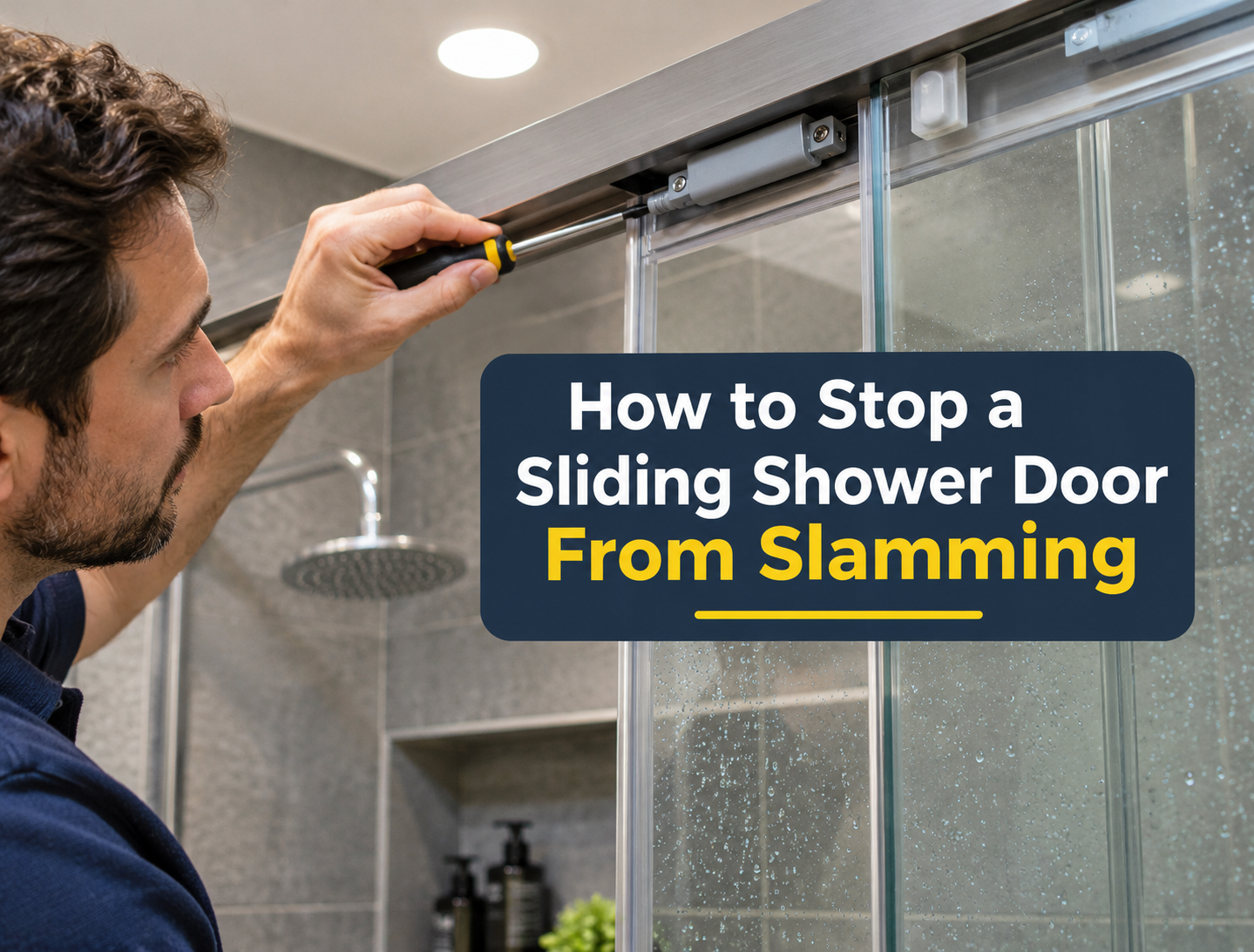


A sliding shower door slamming into the wall, stopper or fixed panel should not be treated as normal operation. The impact can place repeated stress on the rollers, track, handle, mounting connections and tempered-glass panel. It can also indicate that a stopper is missing, a soft-stop mechanism is not engaging or the door is accelerating because of track and alignment problems.
The correct repair depends on why the door is reaching the end of its travel too quickly. Adding a soft-close component may help when the existing system is designed for it, but it will not repair damaged rollers, an out-of-level track or incorrect panel alignment. The complete movement system should be inspected before a new accessory is ordered.
Why Is the Sliding Shower Door Slamming?
Some doors slam because users release the panel with too much force, while others accelerate because the track is not level. A worn roller can also bind during part of the travel and then release suddenly, causing the door to strike the stop. Missing bumpers, loose stoppers and incorrectly positioned soft-stop triggers can make the final impact more severe.
| Symptom | Possible cause | Recommended inspection |
|---|---|---|
| Door gains speed in one direction | Track or header may be out of level | Check level and wall-mount connections |
| Door binds and then moves suddenly | Dirty or damaged roller and track | Clean and inspect the roller assembly |
| Door hits metal sharply | Stopper or bumper is worn or missing | Inspect end-of-travel hardware |
| Soft-close does not engage | Trigger position or damper may be incorrect | Check the approved soft-stop components |
| Door swings as it reaches the end | Bottom guide may be loose or worn | Inspect guide alignment and panel overlap |
| Door repeatedly leaves its path | Roller, guide or anti-jump problem | Stop use and inspect the complete system |
Stop Forcing the Door Closed
Begin by operating the door slowly enough to identify where the problem begins. Do not repeatedly slam it during testing, and do not use the handle to lift or twist the panel. If the glass is leaning, chipped, rubbing against tile or hanging unevenly, stop using the enclosure until it has been professionally inspected.
Check whether the impact occurs only when closing or in both directions. A one-direction problem may indicate track slope, closing-side stopper damage or an incorrectly positioned trigger. Slamming at both ends may point toward user force, excessive free travel or missing motion-control components.
Clean the Track and Inspect the Rollers
Soap residue, mineral deposits, hair and other debris can create inconsistent resistance along the track. Clean accessible surfaces with a soft cloth and a nonabrasive product suitable for the hardware finish. Avoid wire brushes, aggressive cleaners and unapproved spray lubricants because they can damage finishes or attract additional debris.
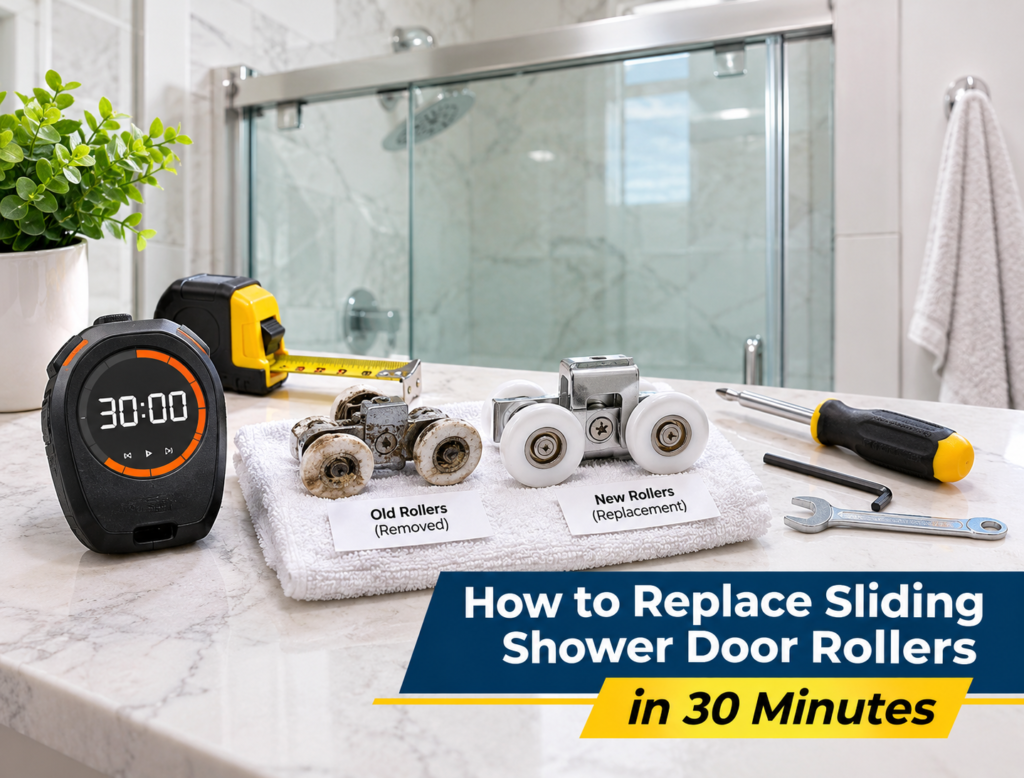
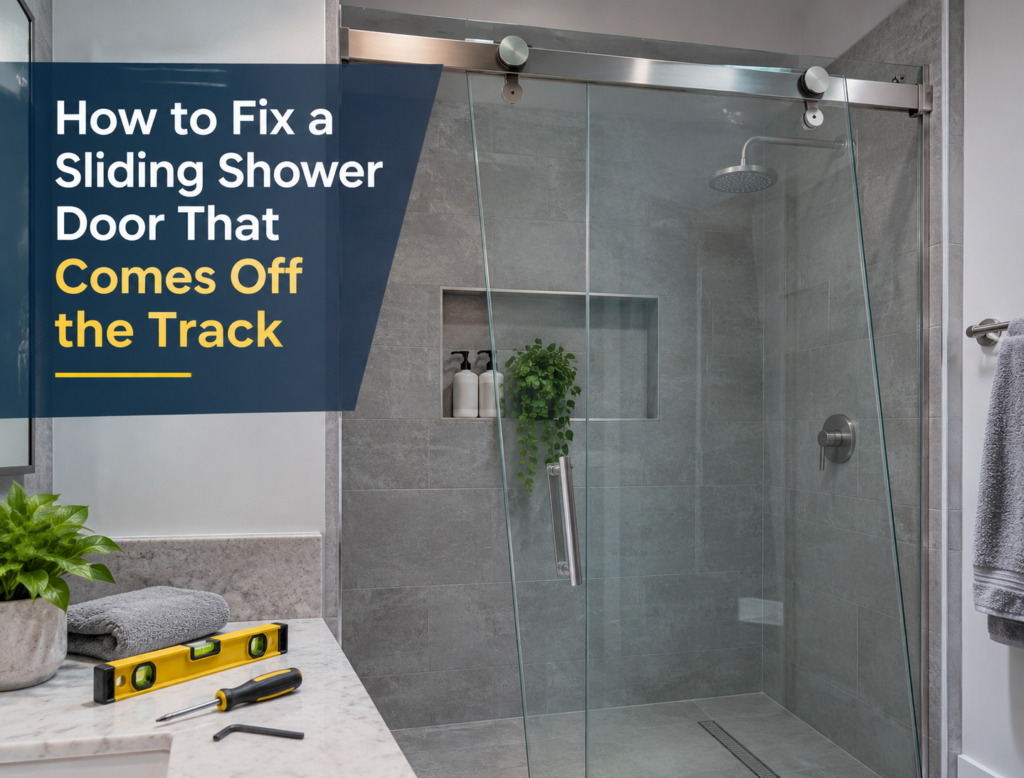
After cleaning, move the panel slowly while watching each roller. A worn bearing, loose axle or damaged wheel may cause the door to drag and then release. If the door is also wobbling or leaving its intended path, Daltex’s guide to fixing an off-track door explains how rollers, guides and stops can contribute to unstable movement.
Check Whether the Track Is Level
A sliding door can gain speed when the header or track slopes toward one end. This may happen because the original installation was not level, a wall-mount connection moved or the supporting surface settled. A long level should be used to check the track rather than judging alignment from grout lines or nearby fixtures.
Track correction must follow the system’s installation instructions. Loosening a header while it carries a heavy glass panel can create a serious handling risk. If adjustment requires supporting or removing the door, an experienced shower-glass installer should complete the work.
Inspect the Stops and Bumpers
Mechanical stops limit the distance a sliding door can travel. Many stops include a rubber or polymer contact surface that cushions the panel or roller assembly at the end of movement. When this material hardens, loosens or disappears, the remaining metal hardware can create a sharp impact.
A loose stopper should be repositioned only according to the original system instructions. Moving it too far may reduce entrance width or allow the handle and glass to contact a wall. Replacement stops must match the track, roller arrangement and operating direction rather than being selected as universal accessories.
Inspect the Bottom Guide
The bottom guide prevents the lower part of the glass from swinging sideways while the upper rollers control horizontal movement. If the guide is loose or worn, the panel may twist as it reaches the stopper and create a harder impact. The guide should control lateral movement without gripping the glass tightly enough to cause dragging.
Panel overlap and guide position should be checked together. An incorrectly positioned guide can change the door angle and prevent a soft-stop trigger from engaging consistently. If the guide has cracked inserts or excessive clearance, use a system-specific replacement.
Check Existing Soft-Close Hardware
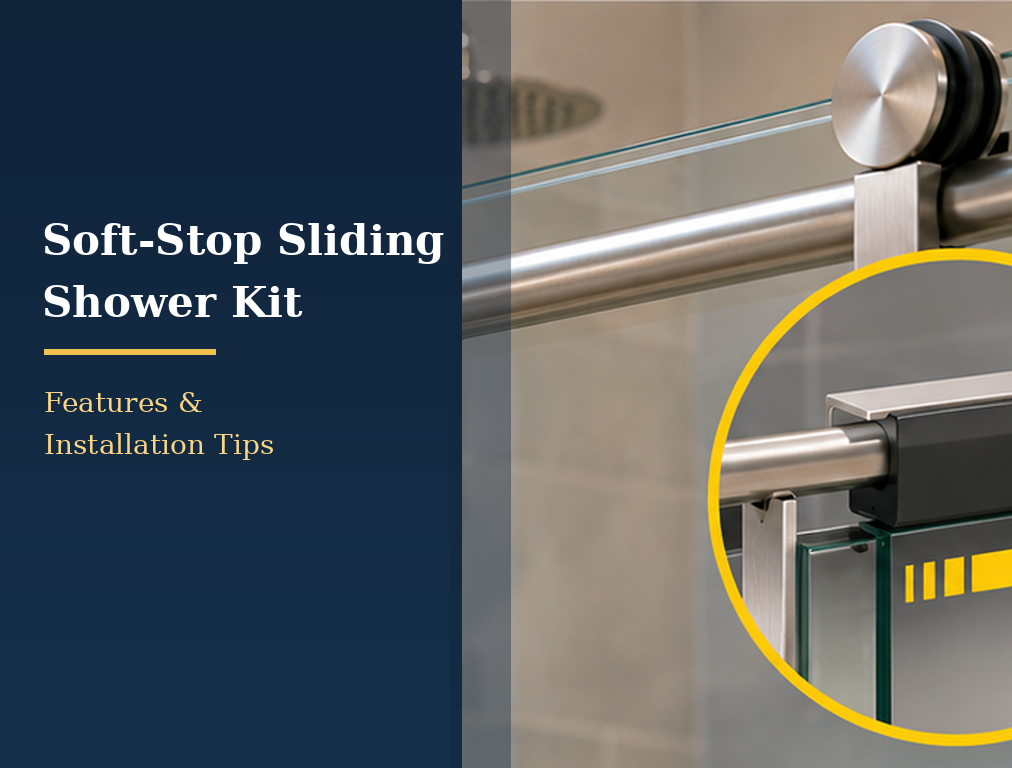
A soft-close or soft-stop mechanism normally uses a trigger that engages a damper near the end of the track. If the trigger is positioned too late, the door may hit the stopper before the damper fully engages. If it is positioned too early, the system may reduce usable travel or create unnecessary resistance.
Inspect the trigger, carrier and damping component for looseness, contamination or damage. Do not apply random lubricants inside the mechanism unless the manufacturer specifically approves them. Daltex’s guide to soft-close doors provides additional information about how the damping system controls the panel’s final movement.
Can a Soft-Stop Kit Prevent Slamming?
A compatible soft-stop kit can reduce the speed of the door near the end of travel and create a more controlled stop. The TideWater soft-stop kit is identified as item TW180SSK and is designed for approved TideWater sliding hardware. Its triggers must be coordinated with the correct track, carrier arrangement, door dimensions and available travel.
This product should not be treated as a universal retrofit for Compass, Denali, Napa, Clearwater or unrelated shower systems. A component that physically fits inside a header may still interfere with the rollers or fail to engage correctly. Confirm the exact sliding series and current installation instructions before ordering.
When Soft-Close Hardware Will Not Solve the Problem
Soft-close hardware cannot repair a bent track, damaged bearing, loose guide or improperly sized glass panel. It also cannot compensate for a door that exceeds the hardware’s weight rating. These problems should be corrected before a damping mechanism is installed.
If several components are worn, identify the complete system before purchasing individual parts. Daltex’s parts guide explains how product numbers, glass thickness, roller design and mounting preparation help confirm the correct replacement. Mixing components from different proprietary systems can create unsafe clearances.
When to Call a Professional
Professional service is recommended when the door gains speed because the track is out of level, the panel must be removed or the glass is unstable. A technician can support the heavy panel while inspecting the roller carriages, stops, guide and wall connections. This is safer than loosening load-bearing hardware while the door remains unsupported.
Dallas-Fort Worth homeowners and contractors can contact Daltex for glass repair when the problem involves damaged glass, worn hardware or an enclosure that no longer remains aligned. A lasting repair should correct the cause of the slamming rather than merely add a softer bumper.
Final Takeaway
To stop a sliding shower door from slamming, inspect the track level, rollers, stops, bottom guide and any existing soft-close triggers. Clean and alignment problems should be corrected before installing new motion-control hardware. When the enclosure uses compatible TideWater components, the system-specific soft-stop kit can provide a more controlled final movement.
Frequently Asked Questions
1. Why does my sliding shower door close by itself?
A door that moves without being pushed may have a track or header that slopes toward the closing side. Roller alignment and wall-mount movement should also be inspected before the door returns to normal use.
2. Can I add a soft-close kit to any shower door?
Soft-close kits are not universal because tracks, carriers, triggers and door dimensions vary. The accessory must be approved for the exact sliding shower system.
3. Can worn rollers make a shower door slam?
A worn roller can bind and then release suddenly, causing the panel to accelerate toward the stopper. Grinding, wobbling and uneven resistance are additional signs that the roller requires inspection.
4. Should I lubricate a sliding shower track?
Use only a cleaning or lubrication method approved by the hardware manufacturer. Unapproved oils and sprays can attract residue, affect polymer components or damage decorative finishes.
5. Does the TideWater soft-stop kit fit Compass hardware?
TW180SSK is intended for compatible TideWater sliding hardware and should not be assumed to fit Compass components. Confirm the exact product series and current installation documents before ordering.
6. Is a slamming shower door dangerous?
Repeated impact can loosen hardware and place unnecessary stress on the glass and supporting connections. Stop using the enclosure if the panel is unstable, chipped or making direct glass-to-metal contact.