

Seven Signs Your Shower Door Seal Needs Replacement
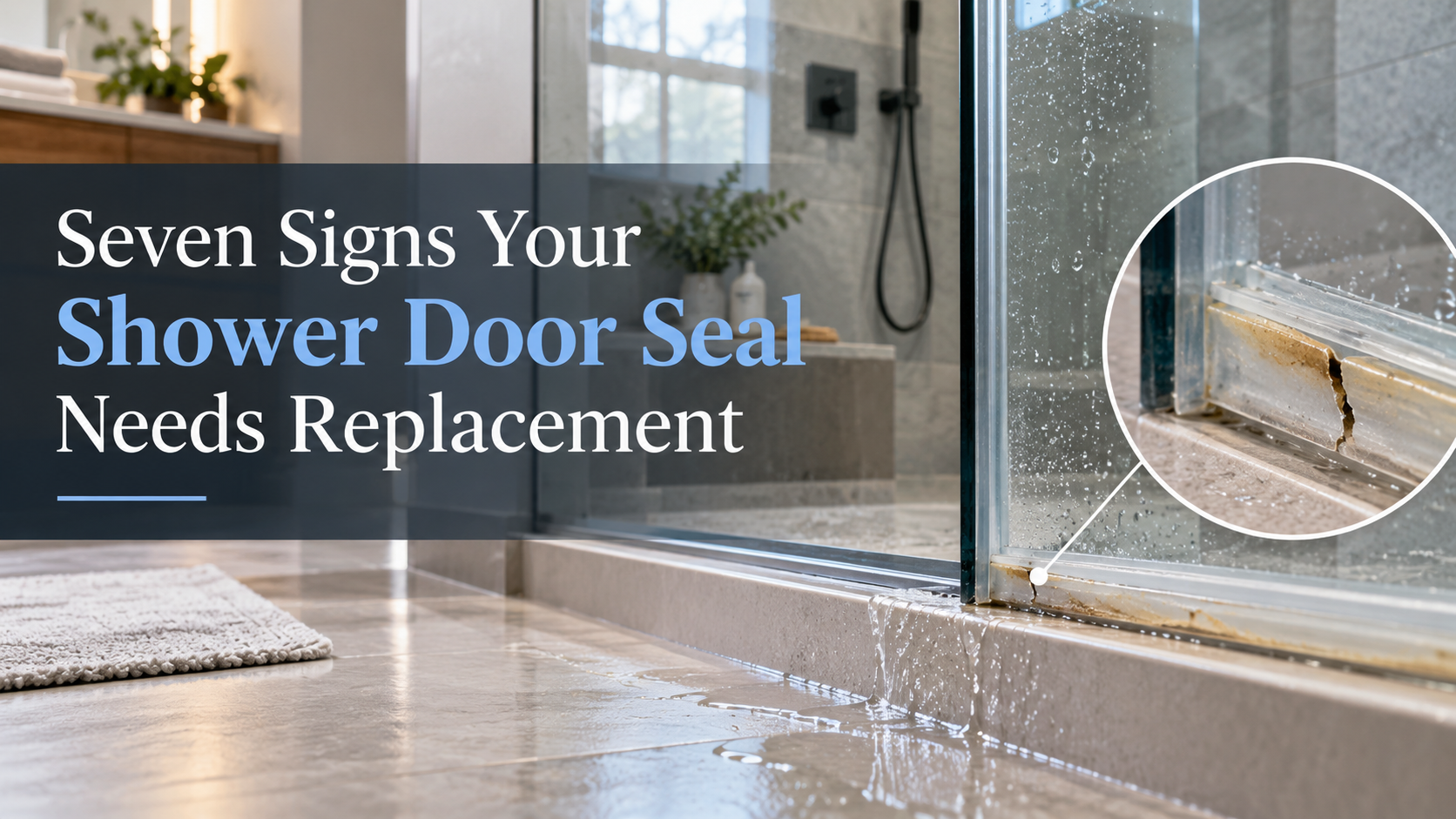


A shower door seal needs replacement when it can no longer grip the glass securely, close the intended gap or guide water back into the enclosure. Seals and bottom sweeps are exposed to water, cleaning products, movement and temperature changes during every use, so their flexible sections gradually become stiff, cracked, discolored or distorted. Recognizing the early signs of deterioration can help prevent water from repeatedly reaching bathroom floors, baseboards and nearby finishes.
Not every shower leak is caused by a worn seal. Misaligned doors, loose hinges, damaged silicone, blocked drainage and an incorrectly sloped curb can produce similar symptoms. Before ordering a replacement from the available shower door seals, inspect where the water is escaping and determine whether the seal itself has failed.
1. Water Is Escaping Beneath the Door
Water appearing directly beneath a swinging or sliding shower door is one of the clearest signs that the bottom sweep may no longer close the gap correctly. The flexible fin can shrink, curl or become permanently bent, leaving enough space for water to pass under the glass. A damaged drip rail may also direct runoff toward the bathroom instead of returning it to the shower base.
Observe the enclosure while the shower is operating and note the exact location of the leak. If water escapes where the sweep no longer touches the curb, replacing the bottom seal may resolve the problem. If water appears at the corners or from beneath the fixed panels, the source may involve silicone, panel alignment or the slope of the threshold instead.
2. The Seal Has Visible Cracks or Splits
Vinyl and plastic shower seals become less flexible as they age. Small surface cracks can develop into complete splits, particularly around the lower corners where the profile experiences repeated movement and contact. Once the fin or channel separates, it cannot maintain continuous contact with the curb, wall or adjacent glass panel.
Inspect the complete length rather than checking only the most visible section. Damage can begin underneath the door or near a hinge where it is difficult to see. A split seal should normally be replaced because adhesive or tape cannot restore the flexibility and consistent water control of the original profile.
3. The Seal Is Hard, Brittle or Permanently Bent
A functional shower seal should remain flexible enough to follow minor variations in the gap without preventing the door from moving. A seal that feels hard, brittle or permanently deformed has lost the flexibility needed to perform this function. Cleaning may improve its appearance, but it cannot reverse material deterioration.
Pay particular attention to fins that remain folded after the door opens. A fin that no longer returns to its original position may leave an exposed gap during the next shower. Repeated bending can also cause the damaged section to tear away from the rigid channel, making replacement more practical than continued adjustment.
4. The Seal Slides Off the Glass
A push-on seal should grip the glass evenly without adhesive, loose movement or repeated repositioning. If the channel slides sideways, drops from the bottom edge or separates when the door moves, it may have stretched, cracked or been manufactured for a different glass thickness. A 1/2-inch channel installed on 3/8-inch glass, for example, may not provide sufficient grip.
Remove the loose seal and confirm the actual glass thickness before purchasing another profile. The replacement should fit firmly without requiring excessive force. Daltex’s guide to replacing a sweep explains how to remove the old component, clean the glass and install a correctly sized replacement.
5. The Door Has Become Difficult to Open or Close
A bottom sweep that drags heavily across the curb can make a shower door difficult to operate. This problem may develop when the flexible fin becomes distorted, when the rigid channel moves out of position or when an oversized replacement is installed. Continued resistance can place unnecessary load on hinges, rollers and other operating components.
The seal should make only the contact required to close the gap and redirect water. If the door has dropped or moved out of alignment, replacing the seal alone may not solve the problem. The hinges, rollers, guides and fixed panels should be checked because the common shower door parts work together to maintain proper movement and clearance.
6. A Visible Gap Remains When the Door Is Closed
A vertical gap between the door and adjoining panel may indicate that the jamb or magnetic seal is worn, incorrectly positioned or no longer aligned. Magnetic profiles should meet consistently from top to bottom, while soft-fin jamb seals should overlap the gap without folding heavily. An uneven opening may allow water to escape and prevent the door from closing positively.
Check whether the gap is consistent along the full height of the glass. A uniform gap may require a different seal profile or fin length, while a wider gap at the top or bottom can indicate door misalignment. Installing a larger seal without correcting the alignment may create excessive pressure on one area and leave another area exposed.
7. Cleaning No Longer Restores the Seal
Soap residue, mineral deposits and normal discoloration can often be removed with appropriate cleaning, but a seal may eventually remain cloudy, stained or rough even after careful maintenance. Deep discoloration is not always a functional problem, yet it can indicate that the material has aged and become more difficult to keep clean. Residue can also collect inside cracked channels and distorted fins.
Replacement is sensible when the seal has become both unattractive and difficult to maintain, especially when other warning signs are present. New replacement shower parts should be selected according to dimensions and compatibility rather than color or appearance alone.
How Often Should Shower Door Seals Be Replaced?
There is no universal replacement schedule because service life depends on water exposure, cleaning products, door movement, material quality and installation. A frequently used enclosure may wear its bottom sweep faster than a guest bathroom that is used occasionally. Regular cleaning and correct door alignment can help a suitable seal remain functional for longer.
Inspect seals periodically for looseness, cracking, distortion and changing gaps. Replacement should be based on condition rather than age alone. If the seal continues to fit securely, remains flexible and controls water effectively, it does not need to be replaced simply because it has been installed for a particular number of years.
Choosing the Correct Replacement
Begin by identifying whether the damaged component is a bottom sweep, jamb seal, magnetic strike, bulb profile or threshold. Measure the glass thickness and seal length, then record the width and angle of the gap. The replacement must also match the door type because swinging, sliding and fixed-panel connections require different profiles.
Do not discard the old seal until the replacement has been confirmed. Its channel shape, fin direction and dimensions can help identify the required product. However, an identical profile may not solve the problem if the original was incorrectly selected, so the current gap and door movement should still be measured independently.
When the Seal Is Not the Real Problem
A new seal will not correct water leaking through failed silicone around a fixed panel or channel. It will also not repair a sagging door, loose hinge, damaged roller, misaligned guide or curb that slopes toward the bathroom. These conditions should be corrected before selecting a seal because they can change the size and position of the surrounding gap.
A professional inspection may be appropriate when the glass has shifted, hardware is loose or repeated seal replacements have failed to stop the leak. Daltex’s shower enclosure services include custom glass, hardware and replacement work for existing frameless, semi-frameless and sliding systems.
Frequently Asked Questions
Can a worn shower door seal be repaired?
Cleaning and repositioning may help when the seal is dirty or has moved slightly, but cracked, hardened or stretched material cannot be restored reliably. Adhesives and temporary patches may interfere with movement or trap residue without recreating the original fit. A compatible replacement is generally the more dependable solution.
Can I replace only part of a shower door seal?
Replacing the complete length usually provides more consistent contact and water control. Joining short pieces can leave gaps where water escapes and may create a rough edge that catches during operation. Standard replacement profiles can normally be trimmed to the required door width or panel height.
Why does my new shower seal still leak?
A new seal may leak if it has the wrong channel size, profile, fin length or installation direction. The leak may also come from a different location, such as damaged silicone, a panel joint, door misalignment or an outward-sloping curb. Observe the enclosure carefully to identify the actual water path before changing the seal again.
Final Takeaway
Visible leaks, cracks, brittle material, loose channels, difficult door movement, persistent gaps and uncleanable deterioration are seven common signs that a shower door seal needs replacement. Before ordering a new component, confirm the glass thickness, seal position, gap size and door movement. If a compatible replacement does not correct the leak, inspect the surrounding hardware, fixed-panel seals, silicone and curb because the seal may not be the underlying cause.


